

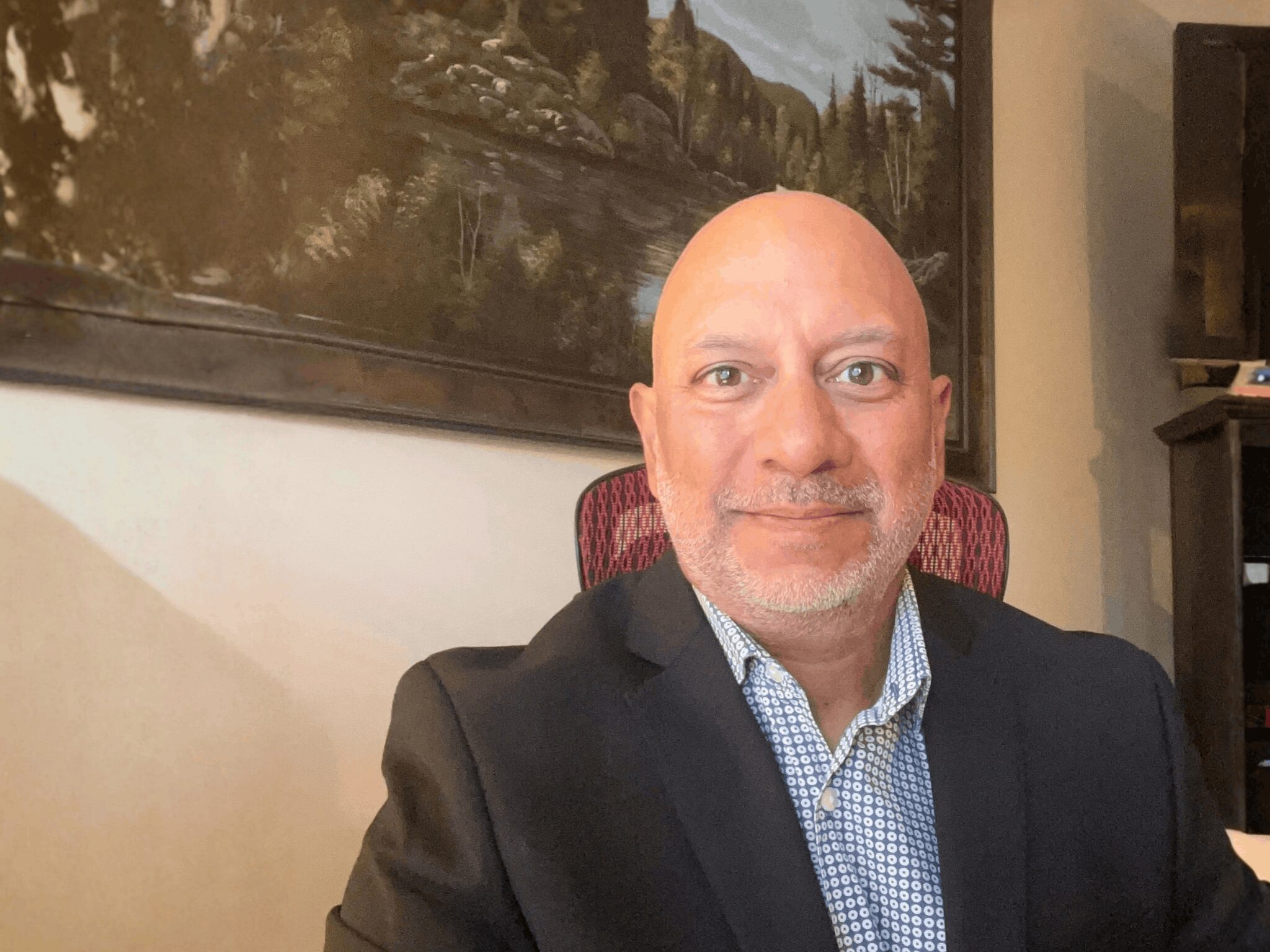
Gil Herritt is Managing Director and Co-Head of Infrastructure Investment Banking at National Bank of Canada Capital Markets, where he advises infrastructure companies and investors across North America. He has more than 15 years of banking and capital-markets experience, with extensive experience across infrastructure/corporate financing, capital raising, and strategic advisory.
Throughout his career, Gil has worked across a broad range of infrastructure sectors, including digital infrastructure, transportation, social infrastructure, and utilities and environmental services. Prior to his current role, Gil held senior leadership positions within National Bank’s Credit Capital Markets group, where his responsibilities extended across a diverse range of industries and clients, including infrastructure, diversified corporates, engineering and construction, power and utilities, leveraged finance, private equity, and fund finance. Over the course of his career at National Bank, Gil has played a key role in expanding the firm’s infrastructure business across North America, including entry points into various new sub-sectors.
Gil is a CFA charterholder and holds an Honours Bachelor of Business Administration from Goodman School of Business (Brock University). He has also completed various leadership and financial modelling courses. He lives in Oakville with his wife and three daughters.
What led you to choose Brock and the Goodman School of Business?
I grew up in Thorold (Niagara), so I was already familiar with Brock University and its reputation. It was a strong academic institution, particularly in business and accounting, and staying close to home made sense. I had friends and family nearby, and Brock offered an excellent education in a community I knew well.
The co-op program was another major factor. The opportunity to gain relevant work experience while completing my undergraduate degree was a significant advantage, especially when it came to finding full-time employment after graduation.
Looking back, those practical experiences became incredibly important in shaping my career.
The most meaningful thing I took away from Brock, aside from my education and career opportunities, was meeting my wife and love of my life.
We were both in the business program and started dating in our third year. Today, we have three daughters and an entire life we’ve built together. That is my fondest memory.
Brock gave me a strong foundation for my career, but it also gave me relationships and experiences that have shaped my life well beyond graduation.
Are there any moments from your time at Brock that stand out as formative experiences?
One of the biggest realizations came when I started exploring opportunities in finance, particularly investment banking and capital markets.
In Canada, and especially on Bay Street in Toronto, there has traditionally been a relatively short list of business schools that major financial institutions actively recruit from. Brock wasn’t necessarily on that list for many firms at the time.
That wasn’t a reflection of the quality of the education.
The fundamental skills you develop at Brock are absolutely comparable to those you’d gain at other strong academic institutions.
The difference often comes down to history, established recruiting relationships, and the influence of alumni who have advanced into senior positions.
I recognized early on that if I wanted to compete for the same opportunities, I needed to work a little harder to get in front of the right people.
In some ways, it gave me a chip on my shoulder. I knew I had the academic foundation and capabilities to succeed, but I couldn’t take anything for granted.
That realization taught me the importance of being intentional about building relationships, marketing myself, and creating opportunities rather than simply waiting for them to appear.
Another experience that stands out was my first-year financial accounting course.
I hadn’t taken accounting in high school, and academics had generally come relatively easily to me. I remember studying for the first midterm and thinking, “I have this. It’s all good.”
Then the midterm came along, and things didn’t go quite as planned.
It was a wake-up call. I realized I needed to dig deeper and put in the work when something didn’t come naturally.
It’s funny looking back because accounting was one of the courses I initially struggled with, and now my entire career revolves around accounting and finance.
Beyond the technical knowledge, Brock’s business curriculum also helped develop skills that have stayed with me throughout my career. Group projects, case studies, presentations, and classroom discussions taught me how to work with different people and communicate ideas effectively.
You can have a great idea, but can you present it properly? Can you explain your reasoning and bring other people along?
Those skills are just as important in business as the academic knowledge itself.
Are there any moments in your career where you felt underestimated? How did you become undeniable?
Absolutely. There have been many.
In capital markets and corporate/investment banking, your starting position can sometimes be influenced by where you come from and the networks you’re exposed to early in life.
Some people enter the industry having attended private schools or having family members in influential positions. I came from Thorold without necessarily having those same advantages.
Instead of feeling self-conscious about my background, I became proud of it.
I knew I had the capabilities and skill set to succeed. The challenge was making sure I put myself in positions where I could demonstrate them.
That meant marketing myself, networking, being persistent, consistently performing in my day-to-day work, and working harder than everyone else.
I was very deliberate about gaining experience and building relationships early in my career.
Through Brock’s co-op program, I completed three work terms that helped me build my resume and establish credibility with prospective employers.
One placement was at CIBC, and during my final years at Brock, I also worked part-time at TD.
Both experiences were valuable professionally, but I also recognized another opportunity: access to the internal networks of major financial institutions.
I could identify which groups were hiring, who was leading different teams, and who I could connect with for a coffee.
It was about being strategic. I wasn’t simply focused on performing well in my existing role. I was also thinking about how each opportunity could help me take the next step.
That approach eventually helped me secure a full-time position at TD after graduating and begin building my career in banking.
But the feeling of having something to prove never entirely disappeared.
Even as you advance professionally, you’re constantly entering new environments, taking on greater responsibilities, and working with people who have different backgrounds or more experience.
I sometimes joke that it’s exhausting to continually feel like you have to prove yourself, but that mindset has also pushed me to keep improving.
For me, becoming undeniable has meant developing the confidence, relationships, skills, and track record to succeed, even when the expectations around me continue to grow.
What milestones or achievements best represent your career journey or impact since graduating?
One experience that stands out happened relatively early in my career.
After graduating from Brock, I joined TD full-time, starting in commercial banking in Kingston before moving to downtown Toronto.
I spent approximately three years at TD before transitioning into capital markets at National Bank in 2011.
I’ve been with National Bank ever since, taking on increasingly senior responsibilities, helping build the business within the infrastructure sector, leading the corporate banking infrastructure group, and more recently becoming Co-Head of the Infrastructure Investment Banking team.
I was working as an associate and considering whether I should return to graduate school. Then, somewhat unexpectedly, I was called in and told I was being promoted to Vice President.
I was incredibly excited, but it was also overwhelming.
I was still relatively young, and suddenly I had direct client coverage, responsibility for originating deals, and a much greater level of accountability.
There was a lot of weight on my shoulders.
While each step represented an exciting opportunity to grow, advancing into increasingly senior roles also meant confronting new expectations and, at times, my own self-doubt.
What made an enormous difference was having the right people around me.
My group head, partners, and mentors within the bank provided guidance and support as I adjusted to the role. They helped me develop the confidence and experience to succeed, which ultimately allowed me to continue advancing.
I’ve experienced similar feelings with subsequent promotions and leadership responsibilities.
As you advance, the stakes become higher. You’re working with increasingly senior people and sophisticated clients who know their industries extremely well. You need to be prepared, informed, and confident in the value you bring.
At those moments, I think it’s important to step back and recognize the experience you’ve accumulated.
I’ve spent more than 15 years at National Bank, developing a deep understanding of the institution, the infrastructure sector, and the clients we serve.
That knowledge wasn’t developed overnight. It came from years of learning, working hard, building relationships, and taking on new challenges.
Another meaningful part of my career has been reaching a position where I can help create opportunities for others.
We’ve hired Brock graduates in the past, and they’ve done phenomenal work. They’ve demonstrated the talent, academic foundation, and work ethic to succeed in a demanding industry.
For me, that’s an important part of the story. I remember what it was like trying to get my foot in the door, and I recognize the difference that an opportunity can make.
Sometimes, all someone needs is the chance to demonstrate what they’re capable of.
What advice would you offer current Goodman students to feel undeniable?
My first piece of advice is to figure out where you want to go, at least directionally.
That’s difficult when you’re young, and you certainly don’t need to have your entire career mapped out. But having a general understanding of the field you want to pursue makes it easier to take the right steps.
If you’re interested in capital markets, for example, there are things you can do early to demonstrate that you’re serious about the industry.
Focus on your academics, get involved in relevant extracurricular activities, and consider additional learning opportunities such as financial modelling, CFA studies, or other finance-related courses.
You’re competing against a large pool of talented people who want similar opportunities. Being focused and intentional about your preparation can make a meaningful difference.
My second piece of advice is to network like an absolute machine.
Put yourself in front of people. Reach out, introduce yourself, ask questions, and look for opportunities to learn from professionals already working in the field.
Get comfortable with people not responding.
Some people won’t reply to your LinkedIn messages. Others won’t respond to emails or requests for coffee. That’s part of life, particularly in investment banking and capital markets.
You have to become comfortable hearing no.
Resilience and persistence are fundamental. You can’t allow one unanswered message or unsuccessful opportunity to discourage you from continuing.
I’d also encourage students to think strategically about the opportunities they already have.
Every opportunity is a chance to build experience and credibility, but also to understand where you can go next. Look beyond your immediate responsibilities and think about the relationships and opportunities that can help you advance.
Wherever you find yourself, think about how you can use that experience to develop your skills, expand your network, and move closer to your goals.
I came from a smaller community, without the same established connections as some of my peers, and I wasn’t necessarily the most confident professionally when I began my career.
What I did have was a strong education, relevant experience, and the willingness to work hard and keep putting myself forward.
If you’re focused, persistent, and willing to create opportunities for yourself, you can accomplish a lot.
Why is supporting the Goodman Legacy important to you, and what does legacy mean in the context of your journey?
When I look at students at Goodman today, I put myself in their shoes.
I know what it’s like to be ambitious, willing to work hard, and trying to find the right opportunities to begin building a career.
That’s why I think it’s important to support students who are hungry to learn, have a strong work ethic, and want to create something for themselves.
Part of that is sharing what we’ve learned. Part of it is creating opportunities for others to show what they’re capable of.
As more Brock graduates advance into senior positions across different industries, I think we have an opportunity to strengthen those connections and keep opening doors for the next generation.
When I think about legacy more personally, it’s about much more than professional success.
To me, legacy means being a fundamentally good and principled person while pursuing your own definition of success.
Everybody measures success differently. For some, it might mean reaching a particular professional milestone. For others, it might be about family, personal growth, or making a meaningful contribution to their community.
I think the challenge is finding the right balance.
I’m naturally curious and always looking for ways to keep learning, whether that’s developing my professional knowledge, structuring better deals, providing greater value to clients, or exploring personal interests like athletics, music, and fitness.
That desire to keep growing extends to my life as a husband and father.
My wife and I have three young daughters, and being a good role model for them is incredibly important to me. I want them to understand the value of hard work, curiosity, and treating people well.
When I reflect on my time at Brock, I see how much of my life began there: my education, my career foundation, and the relationship that became my family.
Ultimately, I think legacy is about the kind of person you become, the opportunities you help create for others, and the principles you carry with you along the way.





Stay Connected
Brock University
St. Catharine’s Campus
1812 Sir Isaac Brock Way
St. Catharine’s, ON
L2S 3A1, Canada
Privacy
| Terms & Conditions
Copyright © 2026 Goodman Legacy