

Steven Fry is a serial entrepreneur and chief executive with a twenty-year record of identifying emerging markets early and building market-leading businesses within them. He has founded, scaled, and led ventures across healthcare, cannabis retail, and sport. The organizations he has built have collectively deployed hundreds of millions of dollars in capital, opened more than 65 locations, and created over a thousand jobs across Canada. His approach is consistent in every industry: move first, build with discipline, and grow quickly.
Steven’s career began in healthcare, where he rose to Vice President of Operations at Shared Services West, leading supply chain and procurement for 14 Ontario hospitals with $1 billion in annual procurable spend. He established a dedicated redevelopment and capital equipment program that supported nine major hospital redevelopments. He subsequently served as Senior Project Director at University Health Network, where he led a large-scale supply chain transformation, rebuilding the entire supply chain function. He also served as a Board Director of the Canadian Medical Equipment Protection Plan.
In 2019, Steven moved to the forefront of Ontario’s newly legalized cannabis retail market. As Co-Founder, President and CEO of Sessions Cannabis, he built one of Ontario’s largest independent cannabis retail brands, scaling to more than 50 locations in three years, roughly 30 of them during the pandemic.
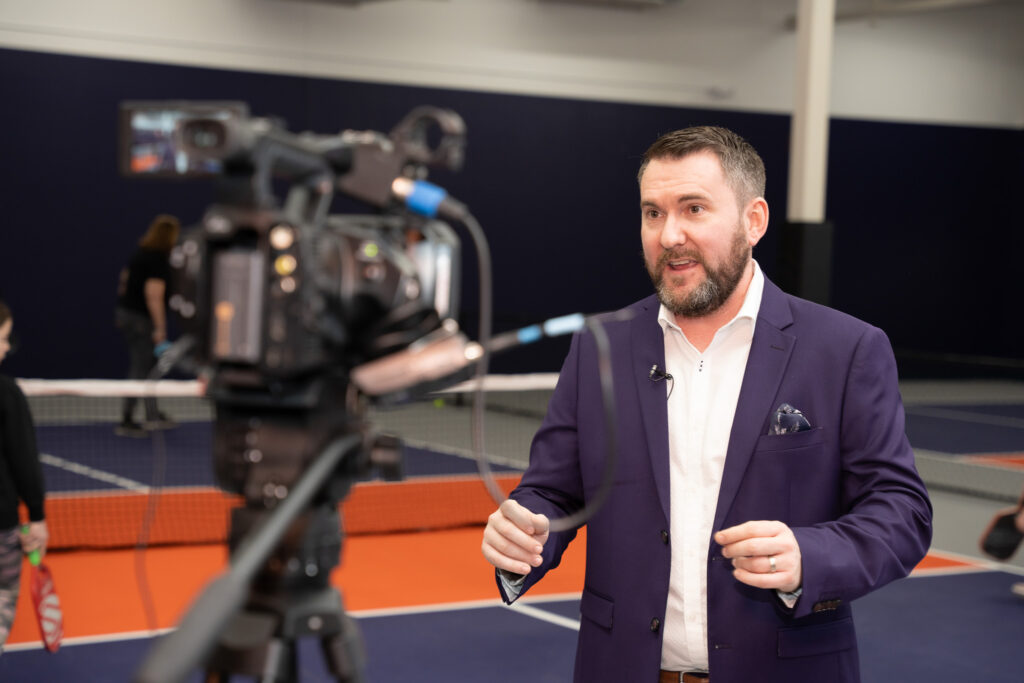
Steven’s current venture is Pickleplex Social Clubs. In under two years, Pickleplex has become Canada’s largest pickleball facility business, with 17 large-format indoor clubs across the country and nearly 200,000 players welcomed to date, and is scaling through a combination of corporate-owned and franchised locations with plans to surpass 50 clubs nationwide.
Steven holds a Bachelor of Business Administration from Brock University’s Goodman School of Business, an MBA from McMaster University’s DeGroote School of Business, and the Certified Health Executive designation. Nearly two decades on, he remains closely connected to the Brock network that helped launch his career.
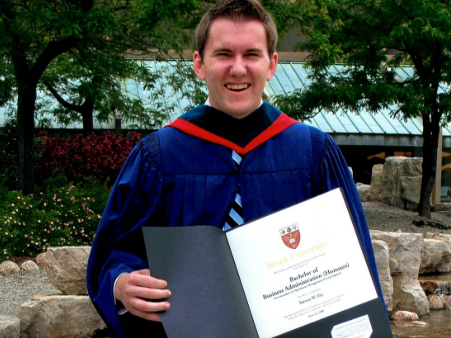
What led you to choose Brock and the Goodman School of Business?
I came from humble beginnings. When I was looking at universities, financial accessibility was a major factor in my decision.
I grew up in a family where university wasn’t necessarily an expected path. I’m the only person in my immediate family to graduate high school, and no one in my immediate or extended family had attended college or university.
In fact, I hadn’t even taken all the prerequisite high school courses I needed to qualify for university.
I remember sitting down with my guidance counsellor and explaining that some of my friends were planning to go to university, and I wanted to explore whether that could be an option for me, too.
We found a way to make it work. I took the necessary courses, applied myself, and earned strong enough grades to receive a scholarship.
Even with that financial support, getting to university required some determination.
The summer before Brock, I worked two jobs at two different No Frills locations. I’d finish one shift at 10 p.m. and head across town for another starting at 10:30 p.m., sometimes working 90 hours a week.
I was trying to save enough money to give myself a foundation to get through school.
When I visited Brock, I fell in love with the university and the Niagara region. The campus was beautiful, and Brock had compelling scholarship and bursary opportunities that made attending university financially possible.
What stood out most was the co-op program.
I didn’t have a professional network or family connections I could rely on to get my foot in the door. I needed to create those opportunities myself, and co-op offered a pathway into the professional world.
Brock gave me what I needed: financial accessibility, a strong business education, and the chance to gain meaningful professional experience.
Looking back, that decision became one of the most important springboards of my career.
How did your Goodman education prepare you for the career path you’ve taken?
The co-op program was one of the most formative experiences of my professional career.
Brock gave me the academic foundation, but it also gave me the tools to apply what I was learning in a real business environment.
I learned about different facets of business, from marketing and strategy to human resources. That broad understanding made me a bit of a Swiss Army knife in whatever business I entered.
The co-op program also taught me something equally important: how to create opportunities for myself.
The school staff helped me develop my resume, prepare applications, and understand where to look for jobs. I used every resource available because I knew I needed that first professional opportunity.
I made applying for jobs my full-time job.
At one point, I was applying for so many positions through Brock’s job board that the co-op staff told me I was effectively setting a record.
I didn’t have someone who could simply make a phone call and get me hired. I had to put myself out there. Brock ultimately gave me my first professional experience outside of working at a grocery store. Once I had that experience, I had something to build upon.
The professors also had an incredible ability to make what we were learning stick.
People like Barry Wright and Mark Julian made the classroom experience interactive, with case studies and practical exercises that helped me come out of my shell.
One of my favourite memories was a presentation for Barry’s class.
My group had procrastinated and practically pulled an all-nighter preparing a presentation on McDonald’s. We went into class unsure of how it would turn out, but we used everything Barry had taught us about presenting. Rather than standing in one place, we moved around the classroom, engaged the audience, and gave it everything we had.
Afterward, Barry pulled us aside and told us, “I just want to let you know that was the best presentation I’ve seen in my professional career. I’ve never done this, but I’m giving you guys 100 percent.”
We couldn’t believe it.
We had been up against the wall, working together to pull something off, and somehow delivered one of our best performances.
Those experiences created a real sense of camaraderie. We earned our stripes together, and some of the people who were part of that presentation are people I still see today.
More than 20 years later, I remain close with friends from the business program, and I still turn to that network for advice.
That’s one of the things I value most about Brock. There was the academic education, but there was also a professional network that has stayed with me throughout my life.
What milestones or achievements best represent your career journey or impact since graduating?
I think of my career in waves.
I’ve always been drawn to emerging markets where I can identify an opportunity early, get in, scale quickly, and build something meaningful.
My first experience with that was in healthcare.
I was a healthcare executive with oversight responsibilities for supply chain and materials management across 14 hospitals, managing approximately $1 billion annually in procurable spend.
At the time, the government was making significant investments in new hospitals and redeveloping aging infrastructure.
I identified an opportunity to build a business within government that could help hospitals manage the complex procurement of furniture, fixtures, and equipment for major redevelopment projects.
When you’re building a hospital, the equipment has to be carefully coordinated with the design and construction. Something like an MRI machine has specific technical requirements that can influence how the building itself is designed.
I saw an opportunity to bring that expertise together into a dedicated service.
That business is still operating more than a decade later.
I’ve also been involved in nine major hospital builds or redevelopments, including Oakville Trafalgar Memorial Hospital.
Both of my children were later born there. I actually went out of my way to have them born at that hospital because I had helped build it.
That was a particularly meaningful full-circle moment for me.
Later, I recognized another emerging market opportunity in cannabis retail, an industry that was just taking shape.
In three years, my team and I expanded to more than 50 stores across Ontario, opening roughly 30 of them during the pandemic, when most businesses were pulling back.
Then came Pickleplex.
When I started exploring pickleball, I didn’t know much about the sport. But I could see an opportunity developing.
I travelled throughout the United States, met with businesses operating in a market that was further ahead of Canada’s, and brought those insights back home.
What started as a bold idea is now Canada’s largest pickleball facility business. With my team, I’ve grown Pickleplex to 17 facilities that have welcomed nearly 200,000 people, and we’re just getting started, with plans to surpass 50 locations nationwide.
We also hosted the Pickleball Canada National Championship, which was the largest pickleball tournament in Canadian history at the time.
On the surface, healthcare, cannabis, and pickleball are very different industries. But to me, they’re all connected by the same approach.
I look for opportunities where a market is developing, identify what needs to be built, and move quickly.
In emerging markets, being early and moving fast matters. Whether it’s securing the best locations for retail or establishing expertise in a developing healthcare service, there’s a competitive advantage to moving before everyone else.
I have one speed, and it’s overdrive.
Are there any moments in your career where you felt underestimated? How did you become undeniable?
My entire career has been an underdog story.
Growing up, I didn’t have a clear roadmap for what was possible. Even attending university required me to overcome circumstances that other students might never have had to consider.
That mentality followed me into the workforce.
When I was applying for my first professional opportunities, there were days when I’d submit more than 50 applications and maybe get one callback or one interview.
It’s easy in those moments to start wondering, “Is it me? Do I have enough experience?”
I learned that you have to keep putting yourself out there.
Sometimes it’s market timing. Sometimes you have to put in that much extra effort to find the right opportunity. But if you stop trying, you’ve eliminated the possibility altogether.
I’ve carried that same mentality throughout my career.
When I entered the cannabis industry, there were executives who questioned who I was and whether I deserved the opportunity.
I had entered the market through a lottery-based process, and some people who had been pursuing opportunities in the industry for much longer looked at me as someone who didn’t belong.
Three years later, we had opened more than 50 stores across Ontario, and some of those same people were looking to acquire my business, or I was looking to acquire theirs.
I encountered similar skepticism when I entered pickleball.
There will always be people who tell you something can’t be done, that you don’t have enough experience, or that you’re in over your head.
But I’ve learned not to let the fear of the unknown or other people’s expectations determine what’s possible for me.
Being underestimated fuels me.
What advice would you offer current Goodman students to feel undeniable?
One of the biggest lessons I’ve learned is that speed in business is often more important than perfection.
You can have the best strategy and the best team, but if you can’t execute, particularly in an emerging market, you can miss the opportunity entirely.
That doesn’t mean you shouldn’t build a business properly.
I’ve learned how important it is to establish strong foundations from the beginning, whether that’s shareholder governance, a good board, trademarks, accounting, or the organizational structures that create long-term value.
A lot of entrepreneurs focus on building a business without necessarily thinking about how to make that business valuable to someone else down the road.
I’ve become skilled at building and scaling businesses with structure and discipline. I’ve also realized that I’m not necessarily the best person to operate a mature business indefinitely.
There comes a point when someone else may be better positioned to take what you’ve built and grow it further. Recognizing that allows me to keep looking for the next opportunity.
For students, I think the most important thing is understanding that you don’t need to have all the answers before you begin.
When I started Pickleplex, I didn’t know much about pickleball. I quickly sought out information, travelled to the United States to learn from businesses ahead of the Canadian market, talked to people, and figured things out along the way.
I think people can get caught in analysis paralysis because they don’t know exactly where to start.
My advice is simply to start.
Meet people. Network. Seek out information. Take a risk. You’ll learn and build momentum as you go.
I often use the analogy of a snowball. You have to get something moving before it can grow.
That first opportunity might lead to a second opportunity, which gives you the experience and relationships to pursue something you couldn’t have imagined at the beginning.
Don’t let fear of the unknown intimidate you.
There often isn’t a playbook, and that’s okay. You can figure out the path along the way.
How do you hope your story inspires the next generation of Brock and Goodman graduates?
I hope students who see themselves as underdogs realize how much is possible.
At 17, I had no idea what I was going to do. I couldn’t have predicted that my career would take me through healthcare, cannabis, pickleball, and entrepreneurship.
I didn’t grow up surrounded by people who had followed those paths, and I didn’t have a professional network waiting for me.
But I learned that you can build one.
Use the tools available to you at Brock. Take advantage of the co-op program. Seek out professors, connect with alumni, and use the resources the school provides.
You also have to own the outcome.
I always tell people, “There’s nobody coming for you.”
That might sound blunt, but to me, it’s empowering. You have to take responsibility for creating the opportunities you want.
Brock represents some of the most formative years of my life, both personally and professionally. It gave me the academic foundation, practical experience, and network that helped springboard my career.
More than 20 years later, I’m still connected to people I met through Brock, and I still rely on that network.
I don’t think people always realize how many talented Brock graduates are out there or take full advantage of those connections.
If a Brock student or graduate reached out to me looking for advice, I’d gladly make time for them.
I have a lot of gratitude for what Brock gave me. It helped shape me as a businessperson and opened doors that I hadn’t known existed.
I came to Brock without a professional network and without a clear roadmap.
Brock helped put me on the map.
If someone like me can figure it out, you can too.






Stay Connected
Brock University
St. Catharine’s Campus
1812 Sir Isaac Brock Way
St. Catharine’s, ON
L2S 3A1, Canada
Privacy
| Terms & Conditions
Copyright © 2026 Goodman Legacy