
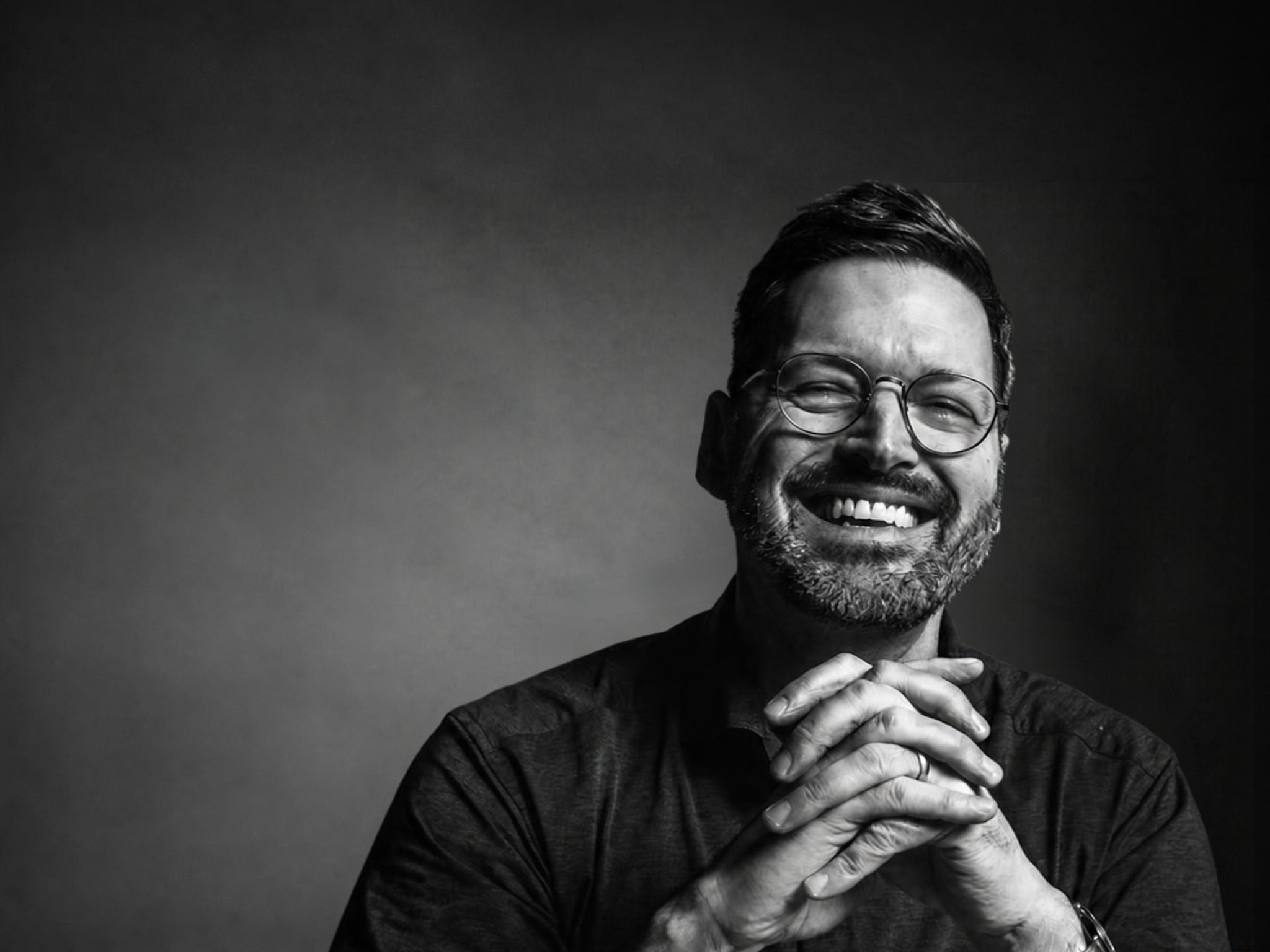
Bryden McDonald is the SVP and General Manager of Cossette (Toronto), one of the last Canadian owned agencies with national scale. Overseeing an enterprise team of 150 strategists, creatives, and business leaders, he is responsible for driving operational excellence and creative performance for the country’s most prominent brands.
Under his leadership, the agency was named the #2 Most Effective Agency in Canada by the Effie Index, while steering transformative work for clients like McDonald’s; helping propel them to Canada’s #1 Marketer of 2025.
Prior to Cossette, Bryden accumulated more than a decade of executive agency experience, serving as Head of Account Management at Anomaly and Business Lead at Grip Limited. A former national team athlete who trained with Rowing Canada, Bryden applies the principles of elite rowing; deep trust, high-performance discipline, and synchronized execution to building resilient, collaborative agency teams.
Known for his “say yes and figure it out” ethos, Bryden specializes in turning complex challenges into growth opportunities, fostering transparent team cultures, and mentoring the next generation of marketing leaders. He holds a degree from Brock University.
What led you to choose Brock University?
When I was in high school, I was a competitive rower. There was a great program in St. Catharines for junior athletes, so I became familiar with Brock University, the rowing team, and the school’s coaches.
When it came time to think about university, I was exploring scholarship opportunities and schools in the United States. People I had spent a lot of time rowing with were going to Brock, and I wanted to stay with that group. I knew the people, I liked them, I trusted them, and we performed well together. Brock was also a good school, so I thought, “This feels right.”
I attended Brock for two years right out of high school and then took some time away to train with the Canadian Men’s Senior B National Team in Victoria, British Columbia. When I finished rowing, I stayed in Victoria, worked for a few years, and tried to figure out what I wanted to do next.
Eventually, I realized that I needed to finish what I had started, so I returned to Brock in my mid-20s.
That second experience at Brock was very different from the first. I was older, I was paying for school myself, and I had a much greater appreciation for what was available to me. I understood that university wasn’t only about going to class. There were people to learn from, relationships to build, and opportunities to pursue. In a lot of ways, that was when my real Brock experience began.
Are there any fond memories, fun stories, or anecdotes from your time at Brock that stand out?
When I returned to Brock, I got involved with the Students’ Union. I started in advertising sales and then moved into special events.
I worked closely with Anya Spethman, then head of communications, on Orientation Week. One year we decided to put on an event right in front of the Arthur Schmon Tower. We were the first to do something like that there, and we really turned it into a full event.
That was really the beginning of my journey to the advertising career I have today. Those experiences allowed me to explore the creative side of what I was capable of.
It was also one of the first times I saw a direct connection between an idea, the work that went into bringing it to life, and how people responded to it. That was exciting to me.
At the time, I don’t think I was consciously thinking, “This is going to lead me into advertising,” but looking back now, there’s a very clear line from those experiences at Brock to the career I eventually built.
What experiences, courses, people, or programs at Brock had the greatest influence on your development?
One person who had a particularly strong influence on me was Sharon Broderick. She was a marketing professor at Brock and also served on the board of the Canadian Automobile Association.
Through my time planning events with the Students’ Union, I became close with her, and she gave me a lot of mentorship. At one point, she said, “You can do events, and I would love you to lead this convention.” It was one of the Canadian Automobile Association’s big national conferences, with around 500 people attending.
That was one of those moments where someone saw something in me and essentially said, “I think you can do it based on what I’ve seen, and I’m going to give you this opportunity and trust that you’ll pull it off.”
And then I did. It was a success.
There was something really powerful about having someone trust me with an opportunity before I necessarily had all the proof that I was ready for it. It showed me that I could step into something unfamiliar, figure it out, and pull it off.
Are there any moments in your career where you felt underestimated? How did you become undeniable?
I’ve never really felt underestimated by other people. I think I have underestimated myself more than anyone else has.
Going back to school was one of my earliest examples of that.
I wasn’t the strongest student when I first went to Brock, and I had been away from academic learning for three or four years. When I decided to go back, I was nervous that I wouldn’t be able to figure it out or have the capacity to learn what I needed to.
Returning to Brock was the best decision I ever made. Fortunately, I had the right support system around me, which helped me do the best I could.
My experiences at Brock helped me build confidence. When someone gives you a chance, trusts you to figure it out, and you actually do it, it becomes proof that you’re capable of more than you might think.
Even today, in my role leading an agency of 150 people, I sometimes find myself thinking, “Can I do this?” That’s the imposter syndrome piece of it. You can underestimate what you’re capable of, and then you surprise yourself when you look around and realize, “I am capable of doing this, and doing it well”
Over time, you start collecting that proof. You remember the last thing you weren’t sure you could do, and then you remember that you figured it out.
So for me, becoming “undeniable” hasn’t really been about proving other people wrong. It has been about learning not to let my own uncertainty stop me from stepping into the opportunity.
If you’re 23, 25, 30, 40, or whatever, and wondering if you have missed your window because you didn’t follow the traditional timeline, I certainly don’t think that is true. Going back to school can open up an enormous number of possibilities and connections.
For me, it opened doors that I don’t think would have opened otherwise. Sometimes coming back when you have a clearer sense of yourself allows you to get even more from the experience.
What milestones or achievements best represent your career journey or impact since graduating?
I began my career later than a lot of people. I don’t think I really started my career until I was around 30.
Since then, I’ve been fortunate to move quickly through the ranks of advertising. Being at the helm of Cossette and helping shape its trajectory over the next few years is something I’m incredibly proud of, especially because there are so few positions like it in the country.
My career wasn’t something I had mapped out from the beginning. I didn’t graduate with a perfectly defined route for getting here. A lot of it came from taking the next interesting opportunity, learning from it, and then recognizing when I was ready for a new challenge.
But I also want to make a positive impact on the people here and help them grow their own careers. That’s an important part of what success means to me.
Rowing has had a huge influence on how I operate as a leader. There are the obvious lessons around teamwork, coaching, and perseverance, but I think one of the biggest things rowing taught me was trust.
When you’re in a boat, you have to trust that the person sitting in front of you or behind you has done the work. Everyone has to be aligned for the group to move forward.
I carry that into the workplace. When I hire people onto my team, I trust that they’re the right people and that they’re doing the work. I try to give them the right guidance at the right moments, but also give them the autonomy to do what they do best.
What I’m able to do with the role matters just as much as the role itself. If I can help other people build confidence, develop their careers, and see possibilities for themselves that they may not have seen yet, that feels meaningful.
What advice would you offer current Goodman students to feel undeniable?
Try stuff.
That’s actually one of the values of our agency. When I look back at the opportunities I pursued without knowing whether I could do them, and simply figured it out along the way, it’s incredible how many connections you make and how many skills you build.
Don’t be afraid to just do it. Don’t worry too much about whether you’re going to mess it up or fail.
And never say no to an opportunity. If something comes your way, say yes and take it, even if you’re unsure of your ability to deliver on it.
I also think it’s important to be honest when you don’t know something. I’m always upfront when I’m unfamiliar with something or in unfamiliar territory. I don’t try to pretend that I know something I don’t.
People respect that, and usually they’re willing to help you. If you’re honest about what you know and what you need help with, people will take the time to help you learn.
I’d also encourage students to use the university to build their network. Advertising is extremely hard to get into, and you’re always looking for someone with experience. I was lucky to make connections and understand how to work those connections.
Think about the university as more than the classes you’re taking. It’s an entire network of professors, staff, classmates, alumni, clubs, jobs, and extracurricular experiences.
Getting involved was what made my Brock experience what it was. Had I simply gone to class and gone home, I don’t think I would have had the same career path.
Why is supporting the Goodman Legacy important to you, and what does legacy mean in the context of your journey?
Supporting the school that helped you get to where you are is important.
When I stopped rowing, I spent many years coaching. There’s something about wanting to give back to the people, organization, or sport that gave something to you. I think about Brock in the same way. It was an important part of my journey.
When I think about legacy, I think about leaving something better than you found it. Our agency’s slogan is “Build Your Legacy,” so that idea is already part of how I approach my work.
The legacy I want to leave is to make sure people feel they have the right opportunities and are supported in the right ways. I want people to be able to build their careers here or use the experience as a launchpad for something else.
When I look back at my own story, some of the most important moments came because someone gave me an opportunity and trusted me to figure it out. Now that I’m in a position to do that for other people, I want to give them that same opportunity to see what they’re capable of.
For me, legacy is about leaving something better than you found it. I want to make sure I can help as many people as possible be successful in this industry. If that’s what people think about me, then that’s amazing.




Stay Connected
Brock University
St. Catharine’s Campus
1812 Sir Isaac Brock Way
St. Catharine’s, ON
L2S 3A1, Canada
Privacy
| Terms & Conditions
Copyright © 2026 Goodman Legacy