
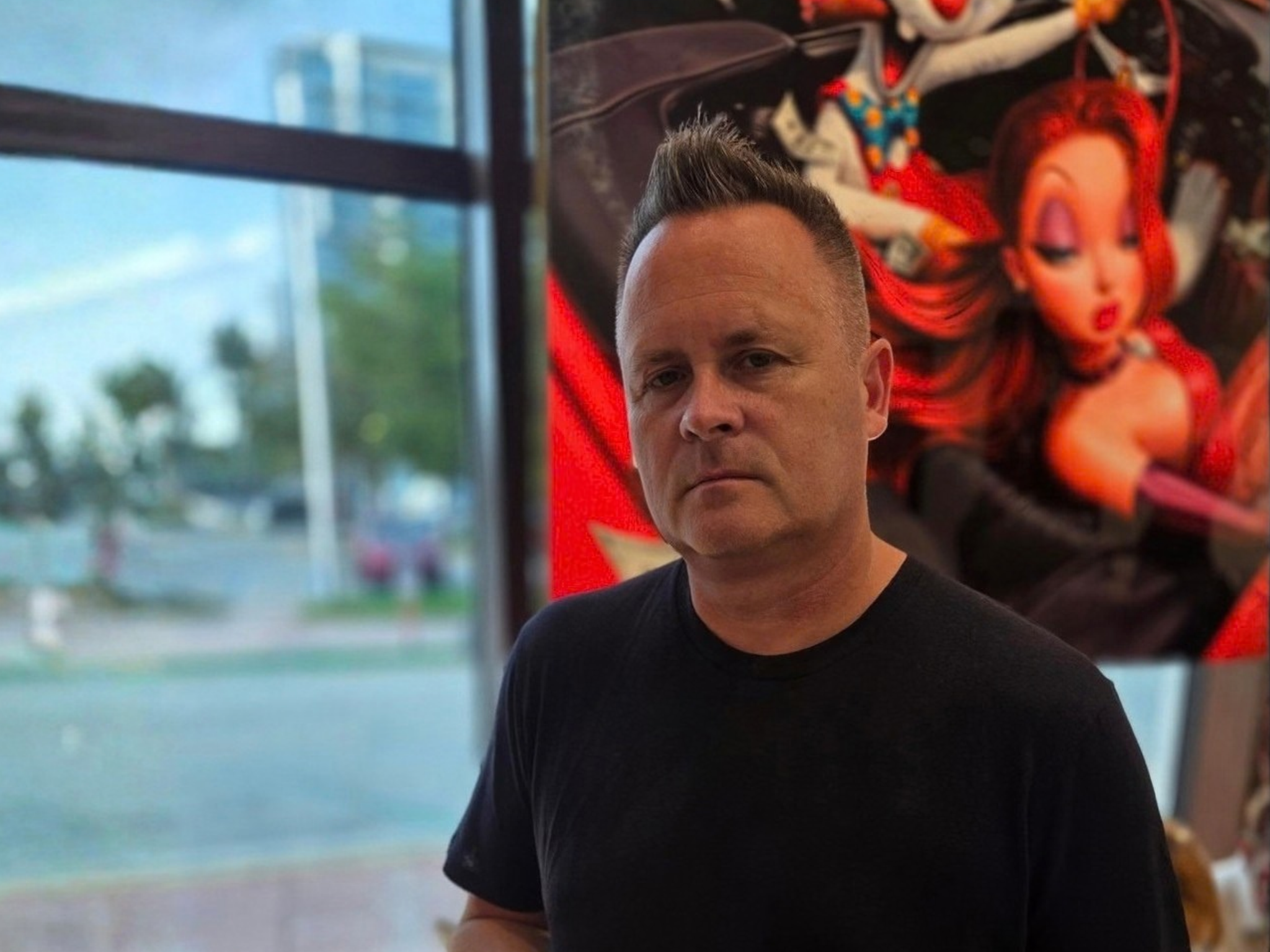
David Rogers is an entrepreneur, business leader, and a graduate of Brock University’s Goodman School of Business. He graduated in 2007 as a member of Brock’s first MBA class, completing the program part-time over several years while working full-time.
David built his career at Da-Lee, the company founded by his father. He ultimately succeeded his father in leading the business and has since overseen its transformation from a small family-owned company into a diversified road maintenance and environmental services platform operating across Eastern Canada and the United States.
Under David’s leadership, Da-Lee has grown both organically and through acquisitions, expanding geographically and into complementary businesses. In 2023, David partnered with Alphi Capital, a private equity firm, to provide additional capital and resources for the company’s next phase of growth. He continues to serve as CEO, focusing on strategy, acquisitions, organic growth, and building the leadership team and infrastructure required to support an increasingly large and diversified organization.
David’s career has given him the opportunity to experience several stages of entrepreneurship—from working in a founder-led family business, to assuming leadership of the company, to building a professional management team and partnering with institutional investors to pursue a larger growth strategy.
His time at Brock’s Goodman School of Business was an important part of that journey. Completing his MBA while simultaneously building his career allowed David to apply what he was learning directly to the challenges of running and growing a business—an experience that continues to influence how he approaches leadership, strategy, and entrepreneurship today.
What led you to choose Brock and the Goodman School of Business?
I was working full-time in my family business when I applied to Brock’s Master of Business Administration program. Location was important because I planned to continue working while completing my MBA part-time, so Brock made sense logistically.
My GMAT score wasn’t great. I had prepared at home and thought I would do okay, but when I actually went in to write the test, my score was pretty poor.
Shari Leitch, who I believe was leading the program at the time, called me and essentially said, “Your GMAT score is not really what it should be, but we want to give you an opportunity.”
She believed in me, and I was admitted to the program.
Being able to keep working while completing the degree part-time proved incredibly valuable. I could learn something at Brock and then watch it play out in real life at work the next day.
At the time, I didn’t fully appreciate how important that would become. Since I completed the MBA over several years, I had time to apply what I was learning directly to the business, rather than trying to cram all that education into two years and apply it later.
That opportunity gave me both the education and the experience at the same time.
Are there any moments from your time at Brock that stand out as formative experiences?
The most formative part of my time at Brock, aside from the education itself, was probably the experience of completing my MBA part-time while working full-time over almost five years.
A lot of life happened during those years. Both of my sons were born, I was building my career in the family business, and at the same time I was trying to complete an MBA. There were definitely periods when I felt burnt out and needed to take a break, but I never seriously considered walking away. I enjoyed learning too much, and I knew I wanted to finish what I had started.
The classroom experience was a big part of that. I enjoyed the professors, the other students, and especially having people outside of the family business to discuss ideas with and challenge the way I thought about things.
What I found particularly interesting was learning, in a formal way, concepts that I felt I had already begun to understand intuitively through working in the business. I would sit in class, hear a professor explain something, and think, “That’s what I thought. I had a feeling that was how this worked, and now I understand why.”
That was important for my confidence. It helped me realize that some of the instincts I was developing about business were sound, while also giving me the frameworks and knowledge to test those instincts rather than simply relying on them.
And because I was working throughout the MBA, none of it was theoretical for very long. I could learn something in class and then go back to work and see it happening in real time. It made me look at our own business differently and constantly ask, “Why do we do it this way? Is there a better way?”
Looking back, that combination of education and real-world experience probably shaped the way I think about business more than anything else.
What experiences, courses, people, or programs at Brock had the greatest influence on your development?
There was a strategy class taught by Professor Sampsa Samila, and some of the lessons from that class have stayed with me throughout my career.
One of the biggest was that competitive advantage is fleeting. What gives a company an advantage today may not be an advantage five or ten years from now. Industries change, competitors adapt, technology evolves, and customer expectations shift. If you want to remain successful, you have to keep evolving too.
I still remember a section of the course about Madonna and her ability to remain relevant and successful across multiple decades. The contrast was with artists who have one big hit or a brief period of success and then disappear. Staying at the top in an industry that is constantly changing requires an ability to understand what is happening around you, adapt, and continually reinvent yourself.
That example has always stuck with me because I think businesses face essentially the same challenge.
I never want to reach a point where we say, “We’ve made it. The company is successful, so now we can just keep doing what we’ve always done.” What got us here won’t necessarily get us where we want to go next. We have to keep learning, questioning what we’re doing, and finding ways to improve.
That mindset extends beyond the business to me personally. Brock really sparked my passion for learning. Since completing my MBA, I’ve continued pursuing education, reading, asking questions, and trying to understand as much as I possibly can about business.
I’m not sure whether I was always wired that way or whether Brock helped me discover how much I enjoyed learning. Maybe I went into the MBA thinking I needed a degree to become competent and came out realizing that becoming competent was never really the finish line.
The more I learned, the more I realized there was to learn—and I’ve never really stopped.
How did your Goodman education prepare you for the career path you’ve taken?
Working in a family business creates an interesting dynamic. My father founded the company, built it from the ground up, and was very successful.
When you grow up around someone who has achieved that kind of success, particularly when that person is your father, you naturally put a lot of weight on what they tell you. If they say, “This is how business works,” you tend to believe them. Their success is the evidence.
One of the things I gradually came to understand, though, is that being successful doesn’t mean every belief you hold or every way you’ve always done something is necessarily right. Sometimes an approach worked extremely well at one point in time, but the business or the world around it has changed. Sometimes there is simply a better way.
As I learned new concepts at Brock, I would bring them back to the business and occasionally hear, “No, that’s not how it works.” And I started having the confidence to think, “Actually, I’m pretty sure it is.”
That was a significant shift for me. I began looking more critically at how we operated and asking why we did things a certain way rather than assuming that the way we had always done them must be the right way. There were moments when I looked around the business and thought, “There’s a lot here that we could do differently—and a lot we could do better.”
In some ways, I was learning and unlearning at the same time.
Brock gave me a foundation in established business principles, but just as importantly, it gave me confidence in my own judgment. I began to realize that my instincts were often pretty good, that I could test those instincts against evidence, and that I was capable of forming my own conclusions.
That combination—being willing to learn, willing to question what I thought I already knew, and willing to change my mind when the evidence pointed somewhere else—has probably contributed as much as anything to my own growth and to the growth of the business.
Are there any moments in your career where you felt underestimated? How did you become undeniable?
I felt underestimated throughout much of my career, and a lot of that came from working in my family business.
My father was both the founder of the company and my boss, and at different points there were questions about my abilities as a businessperson, my work ethic, and whether I could ultimately grow the company successfully.
That became an enormous source of motivation for me. Early in my career, I think a lot of that motivation came from wanting to prove something to other people. Over time, though, it became much more about proving something to myself.
The difficult part was that, for a long time, I didn’t necessarily have the results to back up what I believed I was capable of. The business went through an extended period of relatively flat growth. I believed we could build something much bigger, but belief and evidence are two different things.
Beginning around 2016, and particularly between 2018 and 2023, that started to change. The business really began to accelerate, and for the first time I had tangible evidence that the things I believed about myself and about the potential of the company were translating into results.
In 2016, the company was doing approximately $16 million in annual revenue. Today, after years of organic growth and acquisitions, we are approaching $100 million.
What’s funny is how your definition of success changes along the way. I remember being at $16 million and thinking, “If I can just get this company to $20 million, I’ll feel like I’ve been hugely successful.”
Then we got to $20 million.
Eventually the goal became, “If we could ever get to $100 million, then this would really be something.”
Now we’re right on the verge of that milestone.
There was a time when my dad and his mother were running this company together. More than 50 years later, we’re approaching $100 million in revenue and have built something much larger than I ever imagined when I was starting out.
When I stop long enough to look back at where we started and where we are today, it gives me a tremendous sense of perspective. There’s always another goal, but sometimes it’s important to appreciate just how far you’ve already come.
What milestones or achievements best represent your career journey or impact since graduating?
One of the biggest milestones for me was building a company that had reached the scale, quality, and potential to attract institutional investment.
A lot of that work culminated in late 2023, when we partnered with Alphi Capital to support the next phase of the company’s growth. For me, that represented much more than a transaction. It was validation of what we had built and, more importantly, an opportunity to think differently about what the company could become.
Many family businesses eventually reach a point where they have to ask: what happens next?
My sister and I were never focused on keeping the company in our family for another 50 years simply for the sake of keeping it in the family. We wanted to do what was best for the business, its employees, and its future.
Bringing in an outside investor gave us access to additional capital, expertise, and resources. It allowed us to continue professionalizing the organization, pursue acquisitions, attract talented people, and create opportunities for employees who had helped us get to that point.
That last part is particularly important to me. People who contributed to building the company now have opportunities to take on larger roles, continue developing their careers and, in some cases, participate financially in the value we create together. Those kinds of opportunities would have been much harder to provide when it was simply my sister and me running a family business.
There was another assumption I had to unlearn along the way: that a bigger business automatically means a more stressful life.
My dad used to ask me, “Why do you want the business to grow? More employees just means more headaches.”
For a long time, I assumed he was probably right. But my experience has actually been the opposite. My life is less stressful today with approximately 180 employees than it was when we had 18.
The difference is the people around me. Today we have talented managers, executives, and employees throughout the organization who I trust and who are very good at what they do. Partnering with Alphi Capital also means having other people at the table who are deeply invested in the company’s success and who share responsibility for helping determine where it goes next.
It isn’t all on my shoulders anymore.
I’ve learned that if you build the right team, put the right infrastructure around them, and learn to trust people, growth doesn’t necessarily take away your freedom. Done properly, growth can actually create freedom.
Getting the company to the point where it has the people, resources, and structure to continue growing beyond any one individual is probably the accomplishment I’m proudest of. To me, that is ultimately what building a lasting business is about.
What advice would you offer current Goodman students to feel undeniable?
The biggest thing I would tell students is not to underestimate their own potential. You are probably far more capable than you give yourself credit for.
I spent a lot of years looking at other people and thinking, “That person is much smarter than I am,” or, “They’re more experienced and more successful, so they must know something I don’t.” Sometimes I would defer to someone else’s judgment even when what they were saying didn’t feel right to me, simply because I assumed they knew better.
A lot of that came from not yet having confidence in my own thinking.
Even today, I’ll occasionally meet someone and initially think, “This person knows everything. I wish I knew what they knew.” Then you get to know them over three months, six months or a year, and you realize they’re human like everyone else.
They have strengths and weaknesses. They know things you don’t know, and you know things they don’t. Some people are simply further along in their journey than you are—and that’s okay.
Experience can be gained. Education can be gained. Knowledge can be gained. Confidence can be built.
If you’re at the beginning of your education or your career, you’re naturally going to know less than someone who has been doing it for 20 or 30 years. But that doesn’t mean you’re less capable of eventually getting there—or going further.
Be curious. Keep learning. Seek out experience. Work hard. Listen to people who know more than you do, but don’t be afraid to question things and develop your own point of view.
Most importantly, don’t let where you are today determine what you believe you’re capable of becoming.
Why is supporting the Goodman Legacy important to you, and what does legacy mean in the context of your journey?
I’ve never been particularly focused on leaving a personal legacy. I don’t need a plaque on a wall or a bust somewhere with my name on it. But I do care deeply about leaving a company legacy.
I want to have helped build something that can continue growing, evolving, and creating opportunities for people long after I’m no longer involved. If the company can continue to succeed without depending on any one individual—including me—I think that would be a meaningful legacy.
And if anything I’ve accomplished in business can contribute in some small way to Brock’s legacy, I’m proud to be able to do that too.
Brock was the first place I turned when I decided I wanted to understand business at a much deeper level. The MBA was really the beginning of that journey for me. It gave me knowledge and confidence, but perhaps more importantly, it made me realize how much I enjoyed learning.
My business education started at Brock, but it certainly didn’t end there. Since then, I’ve continued studying, reading, asking questions, seeking out new perspectives, and trying to understand business as deeply as I can.
The interesting thing is that the more I’ve learned, the more I’ve realized how much there still is to learn.
When I look back at my career, that curiosity—the desire to keep learning, questioning my assumptions, and getting better—has probably been one of the biggest contributors to everything that came afterward.
In that sense, Brock didn’t just teach me about business. It helped teach me how I wanted to approach business for the rest of my life.



Stay Connected
Brock University
St. Catharine’s Campus
1812 Sir Isaac Brock Way
St. Catharine’s, ON
L2S 3A1, Canada
Privacy
| Terms & Conditions
Copyright © 2026 Goodman Legacy