

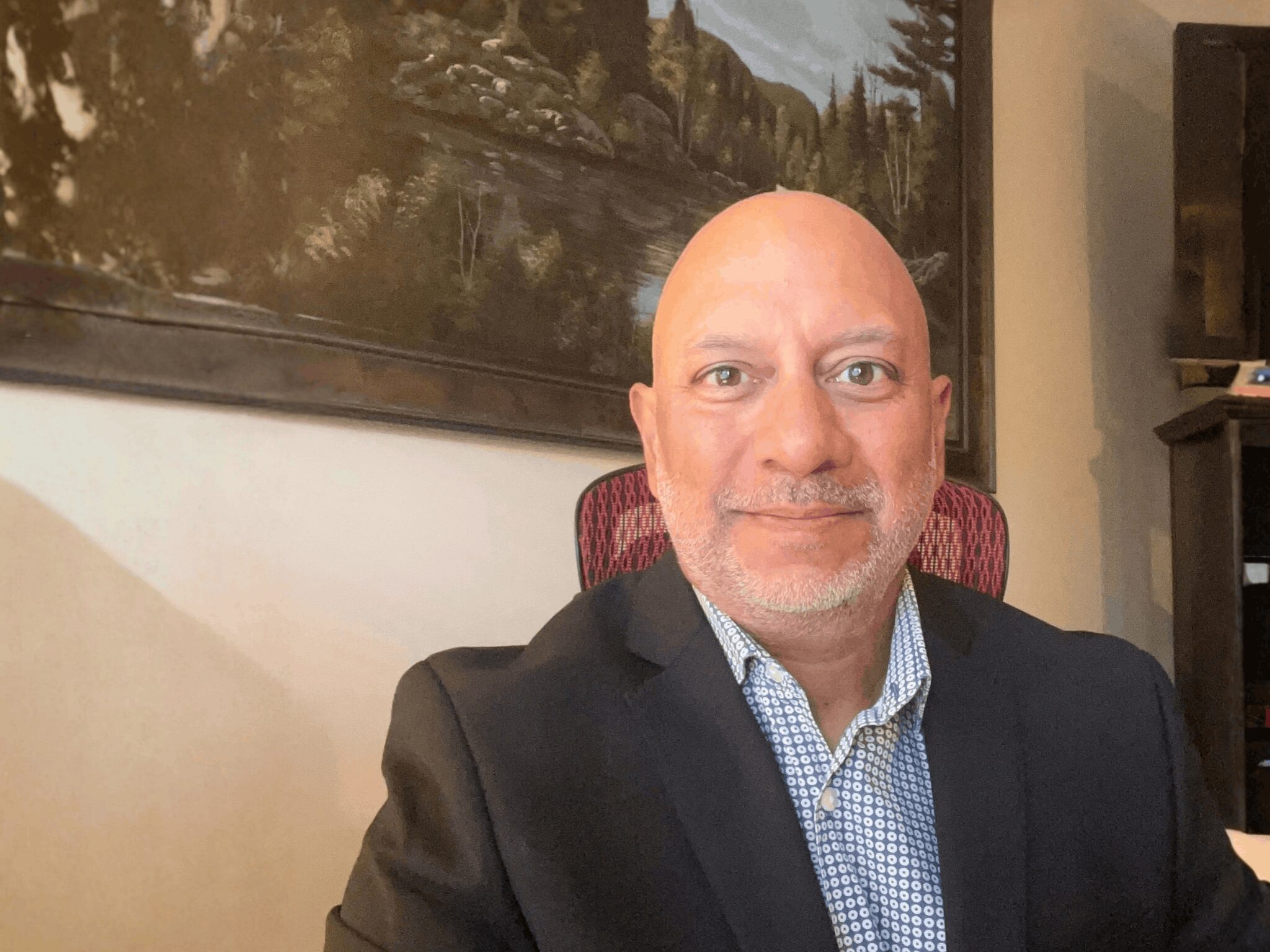
Dan McGrath joined Cineplex Odeon Corporation in 1987 and held various financial and operational roles from 1987 to 2000. He served as Executive Vice President at Galaxy Entertainment from 2000 to 2003 and held that position again with Cineplex Galaxy Income Fund until 2011. He was then appointed as Chief Operating Officer at Cineplex Entertainment and continues to hold that role today.
In his current role, Mr. McGrath oversees theatre exhibition and food service, location-based entertainment (The Rec Room, Playdium), design and construction, real estate, strategic planning, as well as the company’s media business (Cineplex Media).
He is a member of the Board of Directors of Scene+ and is Chair of their HRGC. He is a member of the Movie Theatre Association of Canada (where he is also Treasurer), Canada’s Walk of Fame, the Fundraising Committee for Covenant House, and is a member of the Board of Directors of Creative Realities Inc. (CRI).
McGrath graduated from Brock University with a BAdmin (Honours) and holds the accounting designations of Chartered Professional Accountant (CPA) and Chartered Accountant (CA).
What led you to choose Brock, and what is now known as the Goodman School of Business?
It was a bit of a journey. When I started university in 1980, I wasn’t initially thinking about Brock or a business degree. I had always been a math and science guy and thought I was going to become an engineer.
Before the school year even began, I realized I didn’t see myself as an engineer. Computers were emerging as an exciting new field, so I decided to focus on computer science instead.
After one year at Western, I realized I was no programmer. However, I took a business course and loved it. I knew that was the direction I wanted to go.
At the time, I couldn’t apply directly to Western’s business school. You had to complete two years of a general program before applying, and I didn’t want to take that chance. I had a few friends from high school who had gone to Brock’s business program. They had great things to say about it, and that’s ultimately how I found myself at Brock.
It may not be the most traditional story of how someone chooses a university or degree, but once I got to Brock, I absolutely loved it.
At the time, Brock had only about 1,700 students. Having grown up in a small town, there was something familiar about going to a smaller university. As much as I appreciated the scope and scale of a larger university, Brock felt like the right fit.
Are there any moments from your time at Brock that stand out as formative experiences?
The sense of community at Brock was fantastic. There isn’t one particular story or memory that stands out; it’s the overall experience I remember most. People loved the school, there was a strong commitment to the teams, and people just helped each other out. In such a small community, you really felt that.
The other thing that stands out is the one-on-one relationships we had with our professors. Instead of sitting in a 500-person lecture hall, you might be in a classroom with 30 people. You actually knew your professors and were learning practical things.
I saw just how valuable that was when I started studying for my Chartered Accountancy exams.
I was studying with a couple of people from our program, including my now-wife, and two of her friends who went to the University of Toronto. When we’d study subjects like tax, they were surprised by how much I already knew. Brock had prepared me incredibly well for the accounting profession because we were learning practical skills.
So when I think about my time at Brock, it’s really that combination of having a lot of fun, being part of a close community, and getting an education where you actually knew your professors and were learning things you could take into the real world.
What experiences, courses, people, or programs at Brock had the greatest influence on your development?
One moment I will never forget was having to stand up in front of my marketing class and present to the class.
I know my children did this in high school, but when we were in high school, that was not a thing.
Having that experience at Brock was incredibly valuable because a huge part of my career now involves presenting to large groups, both internally and externally. I started developing that skill at Brock.
We also did a lot of group work. It forced you to learn how to work as a team, and once you enter the business world, you realize that almost everything is about teamwork.
That experience also helped me during my interview at Peat Marwick, which is now KPMG.
At the time, the major CA firms were hiring heavily from schools like Western, the University of Toronto, and Queen’s, with each firm hiring about 50 new graduates.
I went into the interview process completely underestimated by the recruiters because I went to Brock. There was almost a “Brock? Why should I even be talking to you?” attitude.
But my experience at Brock gave me the ability to talk about working with professors, presenting, and working in teams. I was ultimately the only person hired in that group who came from a smaller or mid-sized university.
So I went in as the underdog, but my experiences at Brock helped me stand out and overcome that initial bias.
What milestones or achievements best represent your career journey or impact since graduating?
When I look at the milestones in my career, it’s really been about the choices I’ve made and the opportunities I’ve taken.
Even choosing Cineplex was part of that. I had two job offers, one from Canadian Tire and one from Cineplex. Canadian Tire was the much bigger and more stable organization, but I chose Cineplex because I thought it was a much more interesting industry.
As you go through your career, think about the industries you want to be part of, but also the people you’re going to work with, the culture, and the work you’re going to be doing.
Sometimes there are things that are a lot more important than money. The people you surround yourself with are a huge influence on what you become at the end of the day.
I recently heard someone describe people as either “hands up or hands out,” and that really resonated with me. There are a lot of people who say, “I want to get promoted. I want more money,” but you have to ask, “What have you done differently?”
You have to look beyond your current role sometimes. You might say, “Okay, maybe I’m not loving this particular role, but I can see that it’s going to lead to this,” or, “I can see I’ve got an opportunity.”
Broaden your scope, broaden your career. Opportunity doesn’t always come to you. You have to put your hand up when it’s there and make it your own.
Are there any moments in your career where you felt underestimated? How did you become undeniable?
I started at Cineplex in 1987 and worked in various financial roles until 1994, when I was offered an opportunity to move into operations. This was probably the biggest change in my career.
My new role was to create customer service and employee training programs because, at the time, we didn’t have them. It was a complete change from what I had been doing. I went from being the finance guy to creating customer service and training programs. There were definitely people wondering what value I could bring to operations.
A lot of people in theatre operations had spent their entire careers in the business.
They had started as employees, become managers, and worked their way up. I had come from finance, so I really had to prove myself. I had to take on things I was uncomfortable with, learn areas I knew nothing about, and earn credibility in that space.
One of the reasons I got that opportunity was because I had put my hand up for a project to implement credit card acceptance across our theatres. It gave me exposure to senior people and different areas of the organization, and ultimately opened the door to other opportunities.
Then, in 2000, Cineplex was purchased by a U.S.-based company. I left and joined the smaller company my previous boss at Cineplex had started, which became Galaxy Theatres. I went from being one of hundreds of people at head office to being part of a very small team with a much broader scope of responsibility.
I actually took a 33 percent pay cut to make that move. It wasn’t really about the money. It was about the people and the opportunity to learn. I knew I was going to get exposure to things I wouldn’t have been exposed to otherwise.
Looking back, some of the biggest moments in my career came from being willing to step outside what was comfortable and take a chance on an opportunity. You have to be willing to put your hand up, learn something new, and prove that you can add value in a space you haven’t been in before.
How do you hope your story inspires the next generation of Brock and Goodman graduates?
When I was starting my career, I didn’t really have a mentor. I had people around me whom I worked with and learned from, but I didn’t have someone specifically guiding me.
That’s why I think the Goodman Legacy program is fantastic. If people can hear different stories and take pieces from those experiences that apply to their own lives, then that’s incredibly valuable.
Maybe someone hears something in my story and thinks, “That actually applies to me.” Maybe it helps them recognize an opportunity, reach out, or make a connection with someone who can help them.
I’d also tell students to work hard, but work smart. Hard work still matters, but putting your head down and working 70 hours a week isn’t, by itself, what makes you successful. Build relationships. Relationships go above, below, and across an organization. Be prepared to work hard when you need to, but don’t underestimate the importance of working smart and building connections along the way.
If sharing our experiences through Goodman Legacy can help somebody personally or professionally, then it’s absolutely worth doing.
Why is supporting the Goodman Legacy important to you, and what does legacy mean in the context of your journey?
For me, it comes back to finding ways to help people earlier in their careers. People who want to be successful, whether that’s in their careers or in life, seek advice. They look at other people’s experiences and ask, “What can I learn from this? How can I apply it to my own journey?”
If this program can help someone do that, then it’s worthwhile.
Legacy is about how you help others and what you contribute. That can mean what you contribute to your community, the company you work for, or the people around you.
What you contribute to other people – that’s what legacy means to me.





Stay Connected
Brock University
St. Catharine’s Campus
1812 Sir Isaac Brock Way
St. Catharine’s, ON
L2S 3A1, Canada
Privacy
| Terms & Conditions
Copyright © 2026 Goodman Legacy