

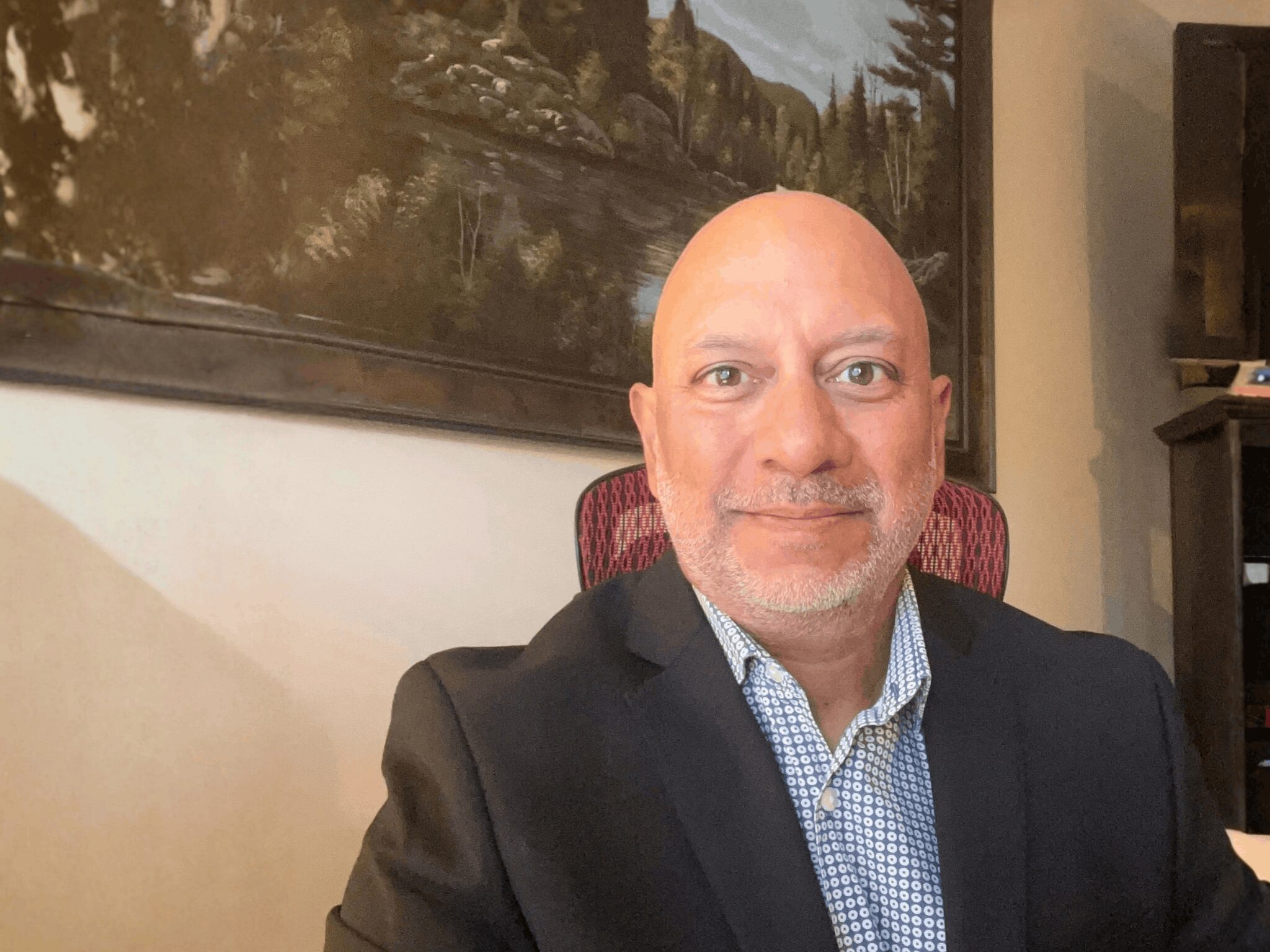
Bill recently retired from the Capital Markets industry after 30 years in the business. In his most recent position, Bill was a Managing Director and Global Head of Rates Trading at RBC Capital Markets.
Bill was responsible for trading risk for Government Cash Bonds, Flow Derivatives, Supra Sovereign Agency paper, Inflation products, Agency Mortgages and Structured Volatility and Interest Rate Options. RBC Capital Markets operates Rates Trading in Toronto, New York, London, Hong Kong and Sydney.
Bill began his career at RBC in the Bank Treasury Trading Operation. After tenors at UBS Canada and Lehman Brothers NY in the Interest Rates Derivatives field, Bill rejoined RBC Capital Markets running USD Fixed Income derivatives.
Prior to his role as Global Head of Rates Trading, Bill managed various areas of the Fixed Income business including USD Rates Trading, CAD Rates Sales and Trading as well as Co-Head Counterparty Risk Trading.
Bill received his Master of Business Administration from the Schulich School of Business, York University in 1989. Prior to that, Bill graduated with a Bachelor of Business Administration from Brock University in 1987.
Bill currently manages WJH Advisors Inc., which provides consulting services pertaining to Global Markets and derivative-related topics, along with Expert Witness Consultation. Bill currently is the Vice Chairman of The Term Corra Oversight Committee, which oversees the market transition from CDOR to Term Corra.
Bill currently resides in Oakville with his wife Margo. Bill has two adult children, Abigail and Griffin. Bill previously sat on the Board of Directors of Canada Snowboard and is involved with United Way of Canada.
What led you to choose Brock and the Goodman School of Business?
I actually didn’t start my University journey at Brock.
I grew up in St. Catharines and graduated from high school in 1981. I was good at math and science, and my brother-in-law was an engineer who seemed to have a successful career. At the time, engineering seemed like a logical path, so I enrolled at the University of Waterloo.
After a year and a half, I realized it wasn’t the career for me.
As I got further into advanced calculus and science, I struggled to see how the theory connected to the kind of work I wanted to do. So I left Waterloo, moved back to St. Catharines, and took some time to figure out what came next.
Eventually, I decided to enroll in Brock’s business program. I went in with a fairly blank slate. My thinking was that I’d give business a try, and if I enjoyed it, I could always transfer somewhere else.
What surprised me was how much I liked the environment.
Most of my business classes were relatively small, sometimes only 30 to 45 students. You could get to know your professors, ask questions without feeling intimidated, and build relationships with the people around you.
That was a big contrast to sitting in a lecture hall with hundreds of students. It suited the way I learned.
As the semesters went on, I became more interested in the courses and more connected to the people. By my second or third year, I wasn’t thinking about transferring anymore. I was enjoying what I was learning and wanted to see where it could take me.
Looking back, what stands out most about Brock is the people. I played intramural sports, spent time with friends, and built relationships with students from different programs. I’m still in contact with several former housemates nearly four decades later.
Those friendships have lasted, but so has the foundation Brock gave me.
What experiences, courses, people, or programs at Brock had the greatest influence on your development?
I often describe my education as the foundation of a pyramid.
Brock provided that first layer of building blocks. The courses, the presentations, the relationships, and the experience of standing in front of a classroom all gave me skills I could continue building on throughout my career.
I entered the business program without a clear idea of where I wanted to end up, but I knew I was comfortable working with numbers.
Some of the early finance and statistics courses were particularly important because I could finally see how those quantitative skills might apply in the real world.
At Brock, I began connecting what I was learning to opportunities I could actually imagine pursuing. We were given the flexibility to discover our strengths and decide where we wanted to take them.
Beyond the course content, Brock also taught me the importance of building confidence in myself and my abilities.
When you’re presenting in front of a class or working through a challenging assignment, you’re developing skills that carry into your professional life. Those experiences may seem small at the time, but they’re the beginning of something much bigger.
Brock was the first layer of my foundation. My MBA later added to that, and once I entered the workforce, I took responsibility for continuing to build.
Are there any moments in your career where you felt underestimated? How did you become undeniable?
Early in my career, the associations people had about what it meant to be a Brock graduate were an uphill battle.
People from other schools might have had an easier time getting their foot in the door. You sometimes had to work harder to get that initial opportunity.
I always believed that once you got your foot in the door, people stopped caring so much about where you went to school. What mattered was the job you did and how you conducted yourself.
After my second or third year at Brock, I was working in jobs that weren’t directly related to finance. At that stage, some of the opportunities I wanted simply weren’t available to me.
After graduating from Brock in 1987, I went on to complete my MBA at York University’s Schulich School of Business in 1989. That opened another set of doors, including interviews with larger financial institutions on Bay Street and in New York.
Even then, nothing was handed to me.
I had to demonstrate strong grades, relevant experience, enthusiasm, and a willingness to put in the work.
I’ve always believed that preparation is one of the best ways to overcome uncertainty.
Someone once told me that if you really know your subject matter, you shouldn’t be nervous about answering questions. I’ve carried that advice throughout my career.
Whether I was preparing for an important presentation or stepping into a new position, I wanted to know I’d put in the necessary time and effort beforehand.
There were certainly times when the bank would put people into positions that challenged them. You might not think you were ready, but part of the expectation was that you’d step into the role and figure things out.
That’s how you grow.
You can’t anticipate everything, but you can prepare yourself well enough to have confidence in your abilities and work through challenges as they arise.
I think that’s an important lesson for any student who feels underestimated. Your education can help you get an opportunity, but what you do with that opportunity is ultimately up to you.
What milestones or achievements best represent your career journey or impact since graduating?
When I look back on my career, I tend to think about three things: where I came from, where I thought I was going, and where I eventually ended up.
If someone had told me when I was in Grade 11, attending a public high school in St. Catharines, that I would spend 30 years working on Bay Street, living in Toronto and New York, and travelling to financial centres around the world, I would have said there was no way that was going to happen.
Yet that’s where my career took me.
I began my career at RBC in its Bank Treasury Trading Operation. I later worked at UBS Canada and Lehman Brothers in New York, specializing in interest rate derivatives, before returning to RBC Capital Markets.
Over the years, I held leadership positions across several areas of fixed income, including U.S. dollar rates trading, Canadian rates sales and trading, and counterparty risk trading.
Eventually, I became Managing Director and Global Head of Rates Trading at RBC Capital Markets.
In that position, I oversaw trading risk across a broad range of interest rate products, with operations spanning Toronto, New York, London, Hong Kong, and Sydney.
It was a level of responsibility and an international career that I never could have imagined when I was starting out.
But it didn’t happen all at once.
Every year, every position, and every new responsibility built on what came before it. You develop your skills, you earn people’s confidence, and you gradually take on greater challenges.
When I retired, I looked at the position I’d reached and thought about how unlikely it would have seemed to that young student trying to figure out his future.
That’s what I find most rewarding. Not necessarily one particular title or achievement, but seeing what years of hard work, perseverance, and staying true to yourself allowed me to accomplish.
What advice would you offer current Goodman students to feel undeniable?
One of the most valuable pieces of advice I received was about making difficult career decisions.
If you’re at a decision point in your career and one path looks easy, you’ve probably made the wrong decision.
Think about what happens when you’re offered a new position that feels intimidating. You might wonder whether you’re qualified, whether you’re ready, or whether you’ll be able to handle the responsibility.
Those are often the opportunities worth pursuing.
If you choose the easy path, you might find yourself in exactly the same position five years later. However, if you take on something that challenges you, you’re forced to develop new skills and rise to the occasion.
That doesn’t mean you should take opportunities without preparation.
You have to look at yourself honestly and ask whether you’ve put in the work. Do you understand your subject matter? Have you developed the skills and relationships you need? Are you willing to commit the time and effort required to succeed?
If you can answer those questions confidently, then I think you owe it to yourself to take the opportunity.
People won’t hand you those chances often, and you never know when the next one will come along.
The other lesson I’d share is about how you treat people.
I had the opportunity to speak to Brock students at graduation after Dean Barry Wright invited me to share some career advice. He later asked me to speak at convocation.
I remember wondering how I was going to stand in front of an entire graduating class and their parents and come up with meaningful career advice.
It made me reflect on the advice I’d received from mentors throughout my career.
One of the most important lessons was to treat everyone the same.
It doesn’t matter whether you’re speaking to a taxi driver, a secretary, a junior employee on a trading desk, the CEO of a bank, or the chairman of the board.
Everyone deserves to be treated fairly and with respect.
Someone once told me to be careful how you treat people on the way up because you never know who you’ll meet on the way down.
That always stayed with me.
You never know where your career will take you or where someone else’s career might lead. Titles and positions change, but the way you treat people is something you can control.
I’ve always tried to carry that principle into my professional relationships.
Why is supporting the Goodman Legacy important to you, and what does legacy mean in the context of your journey?
When you’re a student, it’s easy to get caught up in what you’re doing right now without knowing where it’s all going to lead.
I remember that feeling. I started in engineering, changed direction, and arrived at Brock without a clear idea of what my future would look like.
That’s why I think the Goodman Legacy initiative is valuable.
It gives students examples of what is possible.
They can look at people who came from similar backgrounds, attended the same university, and went on to accomplish things they might not have imagined for themselves.
I’ve always tried to make time for students who reach out to me for advice. If someone is willing to put in the effort to contact me, I can make the time to have a conversation.
I don’t pretend that everything I’ve learned is the answer for everyone. I can only share what worked for me and what I learned along the way.
I know what it’s like to be sitting there wondering what you’re going to do with your education and where your career might take you.
I’ve been very fortunate in what my career and education have afforded me, and I think it’s important to recognize that and find ways to give back. Since retiring, I’ve dedicated more time to volunteering through United Way-supported initiatives, whether that’s sorting food at a local food bank or helping with holiday programs. Those experiences have reinforced the importance of understanding the needs within our communities.
When I reflect on my journey, I think about how much my experiences at Brock shaped what came next.
My MBA allowed me to build on that foundation, and my career gave me opportunities to continue learning and challenging myself.
I came from an ordinary, middle-class background. I attended public school in St. Catharines, and I certainly didn’t start university imagining I’d end up where I did.
When students look at these stories, I hope they recognize something of themselves.
They might look at someone and think, “That person’s no different than me. They put in the work, the time, and the effort, and look at what they achieved.”
Where you start doesn’t have to determine where you end up.



Stay Connected
Brock University
St. Catharine’s Campus
1812 Sir Isaac Brock Way
St. Catharine’s, ON
L2S 3A1, Canada
Privacy
| Terms & Conditions
Copyright © 2026 Goodman Legacy