
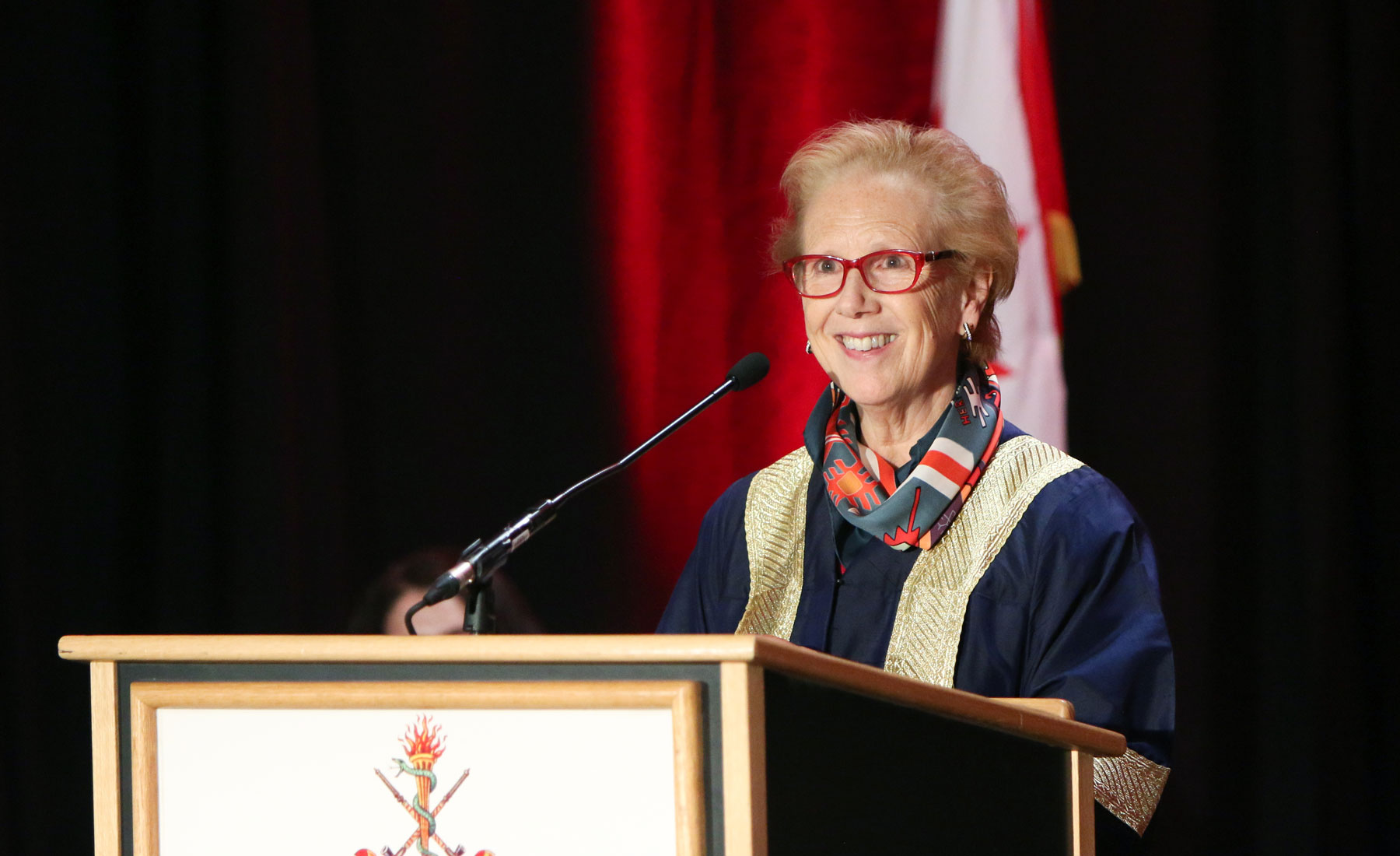
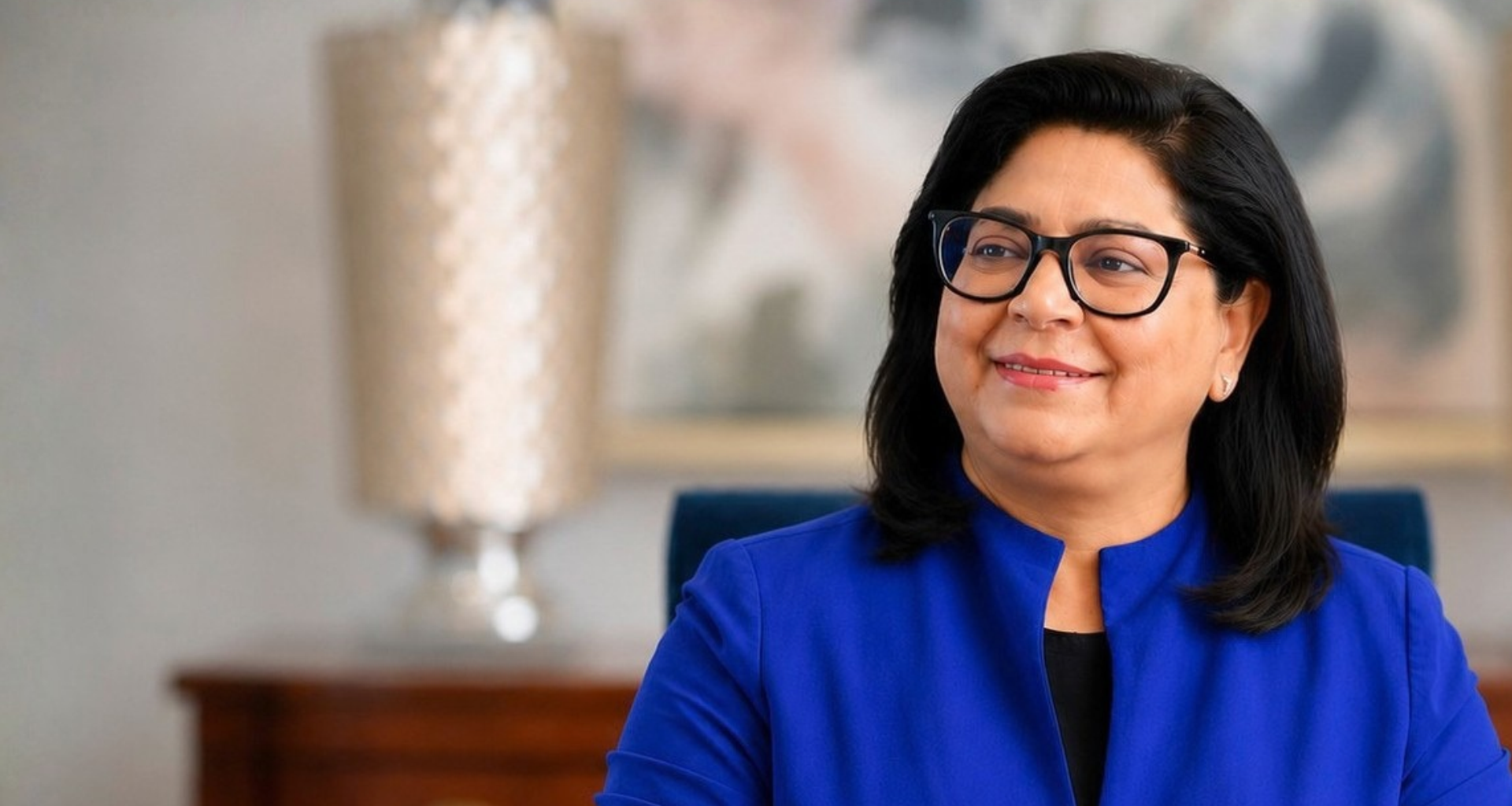
Hilary M. Pearson, CM, BA, MA, LL.D., D.Litt., a recognized Canadian leader in philanthropy and community engagement, became Brock University’s Chancellor in the fall of 2020.
As Brock’s ninth Chancellor, Pearson follows Shirley Cheechoo, who in 2015 became the first woman and first Indigenous Canadian to hold the ceremonial leadership role at Brock.
Much of Pearson’s career in the last two decades has been spent advancing a culture of philanthropy in Canada. She served as President of Philanthropic Foundations Canada for 18 years, working closely with many of the country’s largest private charitable foundations. In 2018, she was named a Member of the Order of Canada in recognition of her contributions to philanthropy.
Her professional background also includes executive positions in the federal government, the Royal Bank of Canada, and as a senior management consultant. As an advisor to many family and independent foundations, and as leader of the national network for foundations, she led professional development and networking for the philanthropic community across the country.
Pearson is the granddaughter of Lester B. Pearson, the eminent prime minister who was awarded the Nobel Prize for his and Canada’s role in UN peacekeeping, and who also ushered in Canada’s iconic national flag. Pearson has a long family association with Niagara. Her husband, Michael Sabia, grew up in St. Catharines and is the son of renowned journalist and nationally recognized feminist leader Laura Sabia.
Pearson has served on the boards of directors of several national non-profit organizations, including Imagine Canada, the Stratford Shakespeare Festival of Canada, CARE Canada, Indspire, and the Canadian Cancer Society. From 2019 to 2023, she co-chaired the federal advisory committee on the charitable sector, which advises the Minister of National Revenue.
She holds a BA and MA in Political Economy from the University of Toronto, and honorary doctorates from Carleton University, the University of New Brunswick and Mount Allison University.
How did your work as Brock University’s Chancellor begin?
When I was invited to become Brock University’s Chancellor, it came as a surprise.
I had always known about Brock through my husband’s family, who had supported the University from its earliest days. Even so, I hadn’t actually spent much time on campus before becoming Chancellor.
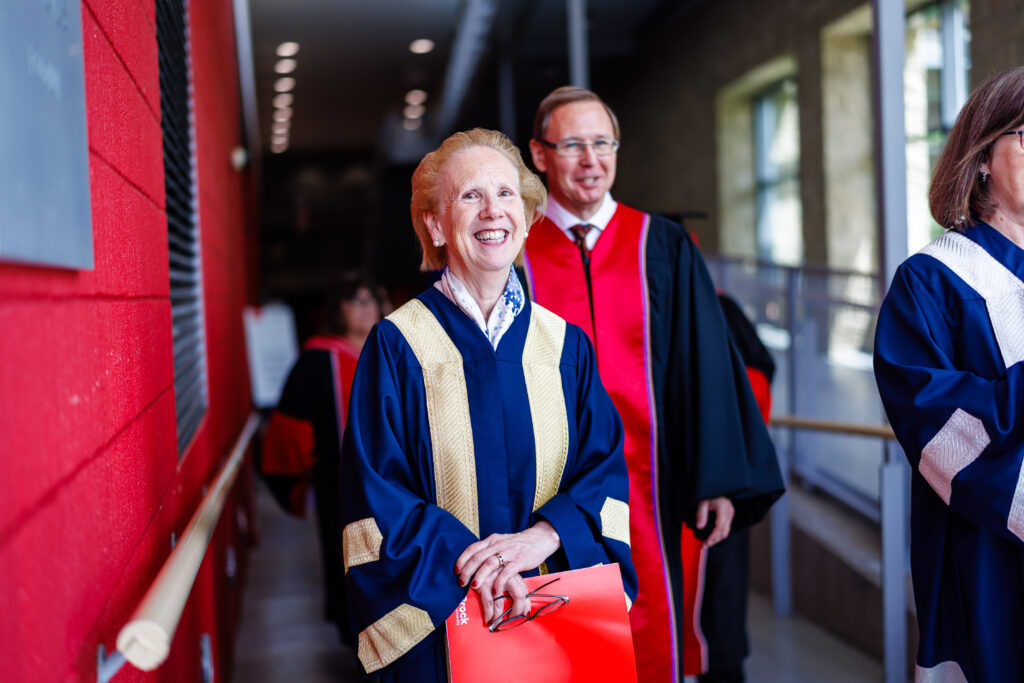
The timing was unusual. It was 2020, at the beginning of the pandemic, when students weren’t on campus, and we were all standing six feet apart. My first in-person convocation didn’t happen until June 2022, so my introduction to Brock was gradual.
Since then, I’ve become deeply rooted in the Brock community. While convocation is one of the most visible parts of the role, what has surprised me most is how much I’ve enjoyed serving on the University’s Board of Trustees in an ex officio role. Being involved in the governance of the University has given me a much deeper understanding of its priorities, its challenges, and its potential. I’m honoured to have recently been renewed for another three-year term as Chancellor through 2029.
What has kept you committed to Brock through these years, and what makes the university distinct?
It starts with the connection I feel to the University’s leadership, particularly President Lesley Rigg and her senior team.
President Rigg has a bold vision for Brock, and I have deep admiration for the work she’s doing. She’s building on the University’s strengths while tackling its challenges head-on, and I think that’s exactly the kind of leadership Brock needs.
Several things continue to stand out to me.
The campus has a wonderfully welcoming atmosphere. Brock is a highly residential university, and I think that matters enormously. For many students, it’s their home away from home, and the University has worked very hard to build a genuine sense of community.
I’m continually impressed by Brock’s commitment to experiential learning. Students have countless opportunities to gain meaningful work experience in their fields, so they graduate with both knowledge and the confidence to apply it professionally. That’s a tremendous advantage.
The University plays an essential role in the Niagara region. Brock works closely with the City of St. Catharines, neighbouring communities, industry, cultural organizations, and educational partners. It’s far more than a university—it serves as a connector for the entire region. Without an institution of Brock’s size and breadth, Niagara would be considerably less well-served.
Equally important is Brock’s commitment to Indigenous communities. The Niagara region is home to Indigenous Peoples with deep historical roots, and the University has made a genuine effort to build meaningful relationships with Indigenous communities while creating opportunities for Indigenous students.
I appreciate, too, how Brock embraces its history. Sir Isaac Brock remains a visible part of the University’s identity, and after every convocation the graduates proudly line up to have their photo taken with his statue. That connection to the University’s namesake helps root Brock in the region’s history while giving students a real sense of place.
Brock is still a relatively young university—60 years isn’t very old—but I think maintaining that sense of history and identity is important as it continues to grow.
You and your husband established an award at Brock for women in entrepreneurship and STEM. What was behind that decision?
We named it the Laura Sabia Entrepreneurial Award after my mother-in-law, a feminist leader in Canada during the 1960s and ’70s. She was a strong believer in what women could accomplish if they were simply given the opportunity.
Laura was the daughter of Italian immigrants who came to Canada with very little and built a life here. She could have been content with a traditional role. She was an exceptional homemaker, a wonderful cook, a gardener, and she made clothes for her family. But she never believed women should fit into a neat box. She always felt she could contribute to the broader world.
She served on St. Catharines City Council, ran for mayor, and ran for Parliament twice, first in 1968 and again after moving to Toronto. She hosted a radio talk show that was broadcast across the Niagara Peninsula, wrote a column for the Toronto Sun, and became the first chair of the Ontario Status of Women Council. She was also a founding member of the National Action Committee on the Status of Women.
Laura was not afraid to ask difficult questions or challenge expectations. She believed women belonged in business, engineering, mathematics, and other non-traditional fields because they were every bit as capable.
She always said, “There is nothing a man can do that a woman can’t do better.”
Creating an award in her name for women entrepreneurs and women studying STEM felt like the right way to honour her legacy.
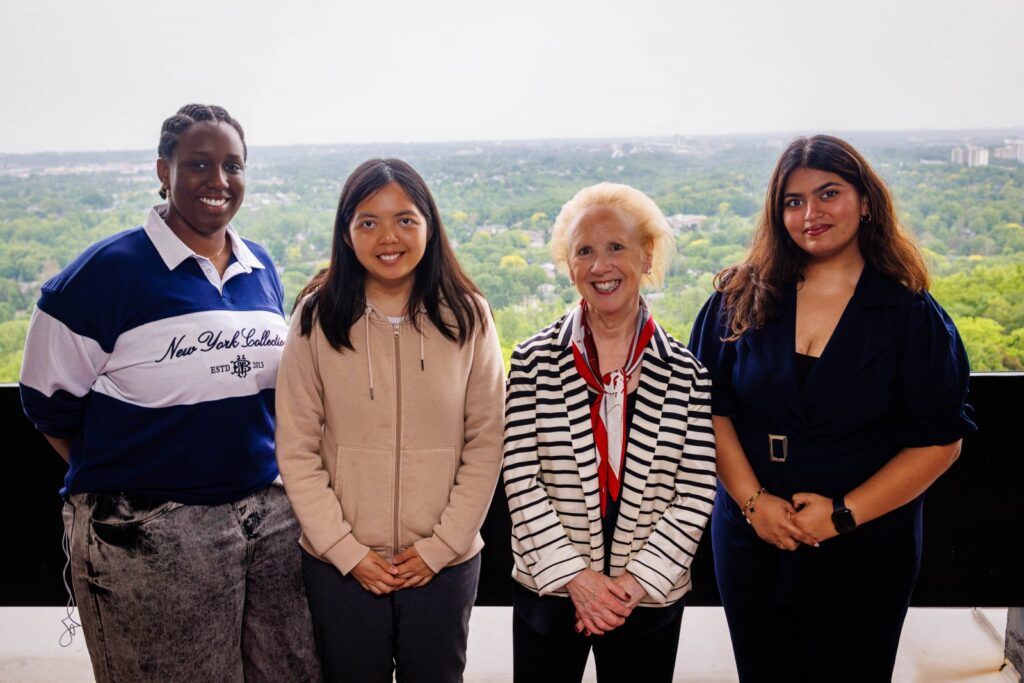
What has been most rewarding is meeting the recipients. They have genuinely exceeded every expectation I had.
They come from all over the world. Many are the first in their families to attend university, and many are already building real businesses.
One recipient was born in Nigeria and came to Canada at the age of 11. She is developing a digital platform to help high school students, particularly newcomers, navigate the Canadian post-secondary system because it was something she needed herself.
Another came to Brock from India, where she had already run a bakery. She is now rebuilding that business here, using the connections and skills she’s gaining at Brock.
The recipients have told me that receiving the award, and being recognized so early in their journeys, gave them the confidence to move forward.
Were there moments in your career when you felt underestimated? How did you become undeniable?
I will admit I have been surprised by where my career took me, and there were certainly early moments of doubt.
When I started in the federal Department of Finance in the 1980s, I was one of the few women hired. But more than that, I didn’t have the technical economics background that most analysts there did. Economics was not my strong suit; political science was. In that environment, I felt underestimated because of it.
After 10 years in finance, I ended my time in the department working directly with the deputy minister and minister. It was there that I realized my strengths were bringing people together, coordinating complex work, and building consensus.
If I had stayed in a niche, trying to be an economic analyst, I would not have succeeded because I didn’t have the same technical skills as many of my colleagues. I would’ve felt like an imposter, and I think many women experience that feeling in certain environments.
The lesson I took from that is: if you try to compete in a space where others have skills you don’t, you’ll always feel like you’re falling short. But if you identify what you’re good at and build on it relentlessly, that’s what carries you forward.
The second thing I’d say is: stay open to opportunity.
In 2001, I was offered the chance to build a national membership network for philanthropic foundations in Canada, from scratch. When the interview committee asked what I knew about foundations, I had to be honest – I knew nothing.
However, what they needed was someone who could communicate, build a case, bring people together, and grow a membership organization. I knew I could do that. While I didn’t know anything about the actual work of grant-making, I knew that I could learn.
So I said yes, and I have now spent 25 years in the field of philanthropy. I would never have predicted that. But the courage to jump, even when you don’t know everything- that’s what you need.
What advice would you offer to students who are stepping into their careers and working to build confidence?
Find what you’re good at, and don’t give up on it.
That sounds simple, but I think it’s actually the core of it. You don’t always realize how brave you need to be in the early days because you don’t know what you don’t know. You’re just pushing forward, building skills, trying to prove yourself, and that’s the right instinct. Keep going.
Further to this, find a good mentor.
It doesn’t have to be someone who spends a lot of time with you. Sometimes it’s the person who says the right thing at the right moment, who talks to you about what they see as your skill, your talent, your ability, and encourages you to go forward with it.
My mother-in-law took great interest in young women for exactly that reason. She’d had to do something that wasn’t necessarily socially approved or expected of someone like her, without much encouragement, and she wanted to be that for others.
Lastly, if I were a young person today, I would seriously consider pursuing a career in philanthropy.
Civil society and philanthropy are truly the third pillar. Business, government, and civil society are all important, and we need strong sectors in all three. So I would encourage people to think about whether they want to commit to being a nonprofit or philanthropic leader sooner rather than later.
What does legacy mean to you, and how does it connect to your work with Brock?
I’m not particularly motivated by having my name on a building or being remembered in that formal sense.
For me, legacy is simpler than that. I hope to be remembered as a chancellor who tried to contribute as much as possible to the university, and serve as a model for future chancellors. The university deserves that, and it needs all the ambassadors it can find.
My career in philanthropy has reinforced something I feel strongly about: giving back is not just about writing a cheque. It’s about engagement. It’s about making a case for the impact that giving can create.
I believe that’s especially true now for younger people, millennials and younger. Impact matters to them.
The connection between Brock and its donors has to begin with one question: What impact are you helping to create?
Impact that can be identified directly at Brock and through supporting Brock in what it does for its students, researchers, and partners. That’s the case the university has to make, and I think it’s a compelling one.
Brock is building that philanthropic culture right now, and alumni are central to it. Many received scholarships that changed the direction of their lives. Now they have an opportunity to extend that generosity to the next generation.
That chain of giving—that’s what legacy looks like to me. Not a name on a wall, but a culture that sustains itself and keeps opening doors.




Stay Connected
Brock University
St. Catharine’s Campus
1812 Sir Isaac Brock Way
St. Catharine’s, ON
L2S 3A1, Canada
Privacy
| Terms & Conditions
Copyright © 2026 Goodman Legacy