
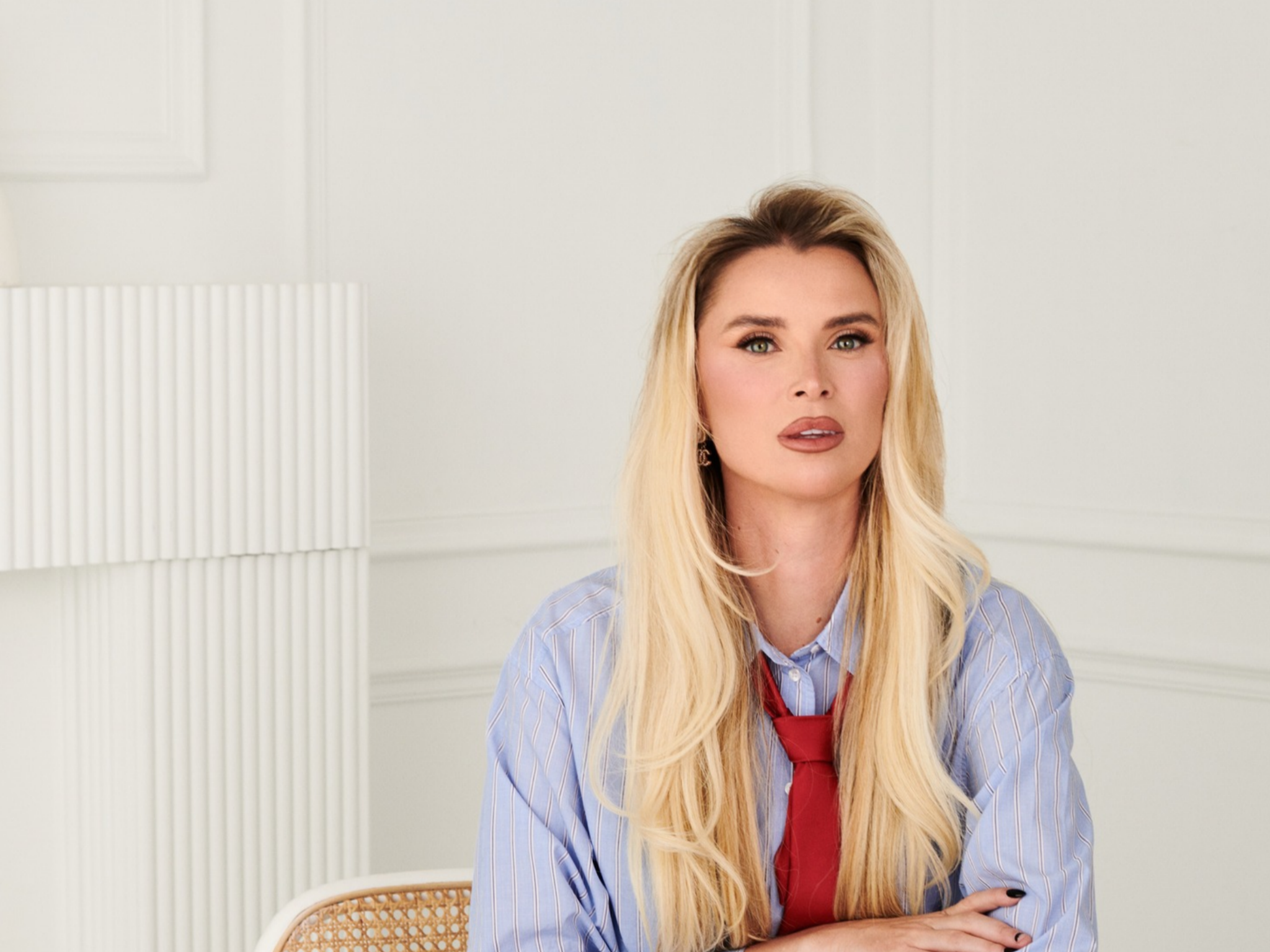
Meghan is a Co-Founder/CEO of Stathletes, a hockey data and analytics company. Stathletes provides industry-leading hockey insights in over 22 leagues worldwide and has scaled to the highest professional levels across North America and Europe.
Meghan is also a Data Scientist in Residence at the Rotman School of Management at the University of Toronto. She was featured on the insert cover of the Hockey News’ Top 100 of Power and Influence in 2019.
She is on the board of advisors of US Integrity in the sports betting space. Meghan has a weekly segment for FanDuel on TSN called “Strength in Numbers”. She has appeared in the last two NHL Drafts as an analyst on the panel for ESPN.
What led you to choose Brock, and what is now known as the Goodman School of Business?
I have had a lot of connections to Brock University over the years.
I was born in St. Catharines and am originally from Niagara. My parents both went to Brock, and one of my brother’s former hockey captains even lived with my parents and later became a captain of the Brock Badgers hockey club.
So there was the proximity, the school’s reputation, the range of undergraduate offerings, and the focus on co-op and other forms of integrated learning.
For me, I knew I didn’t want to do four years and simply be done with school. I always thought of education as a process, and Brock was a really important part of that journey.
How did your Brock and Goodman experience prepare you for the career path you’ve taken?
The technical courses and the business pitches, for sure, had the greatest impact. Goodman had a really well-rounded curriculum that prepared me very well for becoming an entrepreneur.
I took the courses I wanted to take, whether they involved public speaking, coding, or something else, and didn’t worry too much about how difficult they might be.
I remember going to guidance counsellors saying, “Hey, I don’t have these prerequisites, but can I get into this course?” Or, “I know I’m not supposed to take seven courses this semester, but I really want to. How do we make this happen?”
The breadth of what I studied and did at Brock was really unique. I probably annoyed some professors who were thinking, “What are you doing? You don’t have one clear path.” But I wanted to learn as much as I could about the subjects that interested me.
That curiosity, breadth of knowledge, and opportunity to meet different people and professors were really valuable to me. University is a unique time when you can fail and push the boundaries of what you’re comfortable with. I certainly did that.
The case studies and group projects were also really helpful. I majored in finance, but I took marketing, operations, and other areas of business. Almost every area of the business I work in now is something I encountered in a course and understand from a theoretical perspective.
I still draw on a lot of those basic principles of business.
Are there any moments from your time at Brock that stand out as formative experiences?
Stathletes started unofficially about 18 years ago. My brother, John, had an injury and was helping some hockey players who wanted more data about their performance. My friend Neil Lane and I started building out the software and tools while I was still at Brock.
John and I later entered what I believe was the first Monster Pitch at Brock, and we won. The pitch was about five minutes, and I think the prize was $5,000. Our idea at the time was to create a database, collect more hockey data, and use it to help teams perform better.
For us, it was another opportunity to put ourselves out there and test the idea.
Beyond winning the Monster Pitch, the Brock professors were extremely helpful in teaching us how to craft a pitch. How do you communicate your idea clearly? How do you tell the story in a way that makes sense to people and focuses on what they care about? We learned a lot of those lessons through the pitching process.
There was one professor at the time, whose email I wish I could find, who wrote to me and said, “This company may become your life’s work.”
At the time, I thought, “That’s extreme.” But now, 18 years later, I’m thinking, “That professor knew.”
I didn’t have a lot of people saying, “Hey, if you actually focus on building out this business, you’ll be really successful.” He certainly did in that email. I always remembered that, and I carried it with me for a long time.
From there, we went from an idea as students to having paying clients, then into a growth mindset: How do we scale? How do we find more technical employees and build out our strategy?
Post-COVID, we’ve become very focused on automation, AI, and computer vision and what those technologies look like for the progression of our company.
We’ve done thousands of pitches since our time at Brock. The context changes when you move from pitching in school to doing real business deals, but one thing I’ve learned is that it doesn’t get easier. You just get better.
What milestones or achievements best represent your career journey or impact since graduating?
Making our first million as a company was a big milestone. Breaking eight figures was a milestone, too. Getting over $10 million in revenue and having around 200 employees is pretty significant for a technology company in the Niagara region.
I’ve also been fortunate to receive recognition for my work, but some of the milestones that mean the most to me are connected to the company we’ve built and the opportunities we’ve been able to create for other people.
For me, another meaningful measure of impact is how many Brock students and graduates we’ve been able to hire. I’d guess we’ve hired 300 or 400 over the last 10 years, maybe more.
So many people in the Niagara region have some sort of connection to Brock, and it has become an important part of our company as well.
What challenges have you faced in your career, and what advice would you offer current Goodman students?
I never felt like I had to prove myself, per se. As a woman in sports and technology, there’s always a bit of a chip on your shoulder, but I just try to give my best every day.
There are challenges every day in business, and you almost have to embrace a little bit of the chaos and accept that not everything will go your way.
Resilience, problem-solving, scrappiness, and grit are important. I’m good with failure. I actually kind of like failure. I think it’s fun.
If you’re not hearing “no,” you’re not pushing hard enough. You have to be very comfortable with failure and see it as a yellow light, not a red light.
I fail a lot. That’s fine. That’s good. I succeed a lot too because I try a lot. It’s a bit of a percentage game.
My advice is to be open to change and be open to challenges. The ability to say, “Today didn’t go well, but I can change tomorrow,” start with a clean slate, reprioritize, and get back at it with the same level of energy is a superpower.
Build up that muscle of work ethic and excitement about your work. It doesn’t have to be what you’re most passionate about. It can be the intersection of what you’re really good at and what the market needs.
Don’t choose easy problems to solve. Choose harder problems and make it easier on yourself in the long term.
How do you hope your story inspires the next generation of Brock and Goodman graduates?
Hopefully someone reads this and thinks, “Why not me?”
I hope it dispels some of the myths that can be roadblocks to success. Whether it’s “I’m Canadian,” “I’m a woman,” “I’m in technology,” or “This isn’t who normally succeeds,” I think there’s always an excuse you can find.
I hope people think about what they could do instead. I also hope people recognize that you don’t necessarily have to leave the region to build something successful. There’s great talent here, great schools, and opportunities to build successful businesses right here in St. Catharines and Niagara.
Be intellectually curious.
Be thoughtful about how you recruit and build teams.
Think about what opportunities are available to you.
I still don’t know what the next step is. Every time you hit a threshold, you figure out how to scale and how to keep going. Everything changes in business.
People often ask me, “How can I be you?” And I say, “You could never go back and recreate the same scenario from 15 or 20 years ago.”
You’re going to have to figure out your own scenario, your own framework, what you like to do, and what you’re good at. Just because you’re at a threshold that other people see as success doesn’t mean it’s the end of your journey.
There’s so much more ahead of me, so much more ahead of my company, and so much more work to be done.
Why is supporting the Goodman Legacy important to you, and what does legacy mean in the context of your journey?
It has always been important to give back.
I think about life in terms of “learn, earn, return.” My university years, including my time at Brock, were part of the learning phase. Now I’m sort of in the “earn” season of my life. Then, of course, there’s return.
Even in this “earn” season, I try to make giving back part of what I do. I volunteer, give lectures, and do a lot of work around women in sports and women in technology.
For me, it comes down to service and gratitude. I believe the energy you put out comes back to you in some way.
My work is about serving clients, serving my employees, and continuing to grow into the best version of myself.
Legacy is important, but you have to balance legacy with having an impact locally: what I can do for my community, my family, the schools we touch, and the work we do.
For me, it’s about making the world a little better for everyone around me.
Kindness, fun, and solving really great problems are all part of that. We work in hockey. We literally live the dream every day.
Being grateful for that along the journey is part of legacy for me.
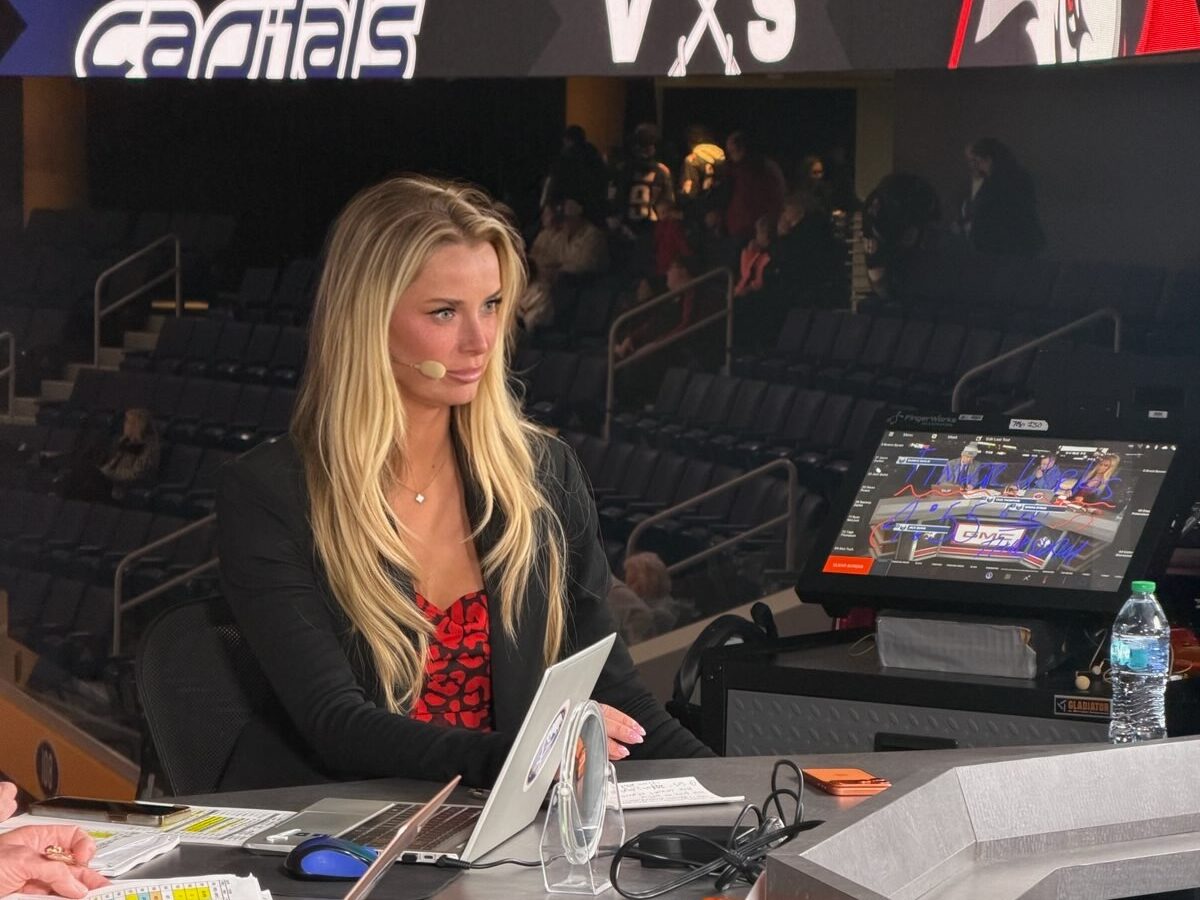
Meghan Chayka, data scientist and co-founder at Stathletes, provides live hockey analysis.




Stay Connected
Brock University
St. Catharine’s Campus
1812 Sir Isaac Brock Way
St. Catharine’s, ON
L2S 3A1, Canada
Privacy
| Terms & Conditions
Copyright © 2026 Goodman Legacy