
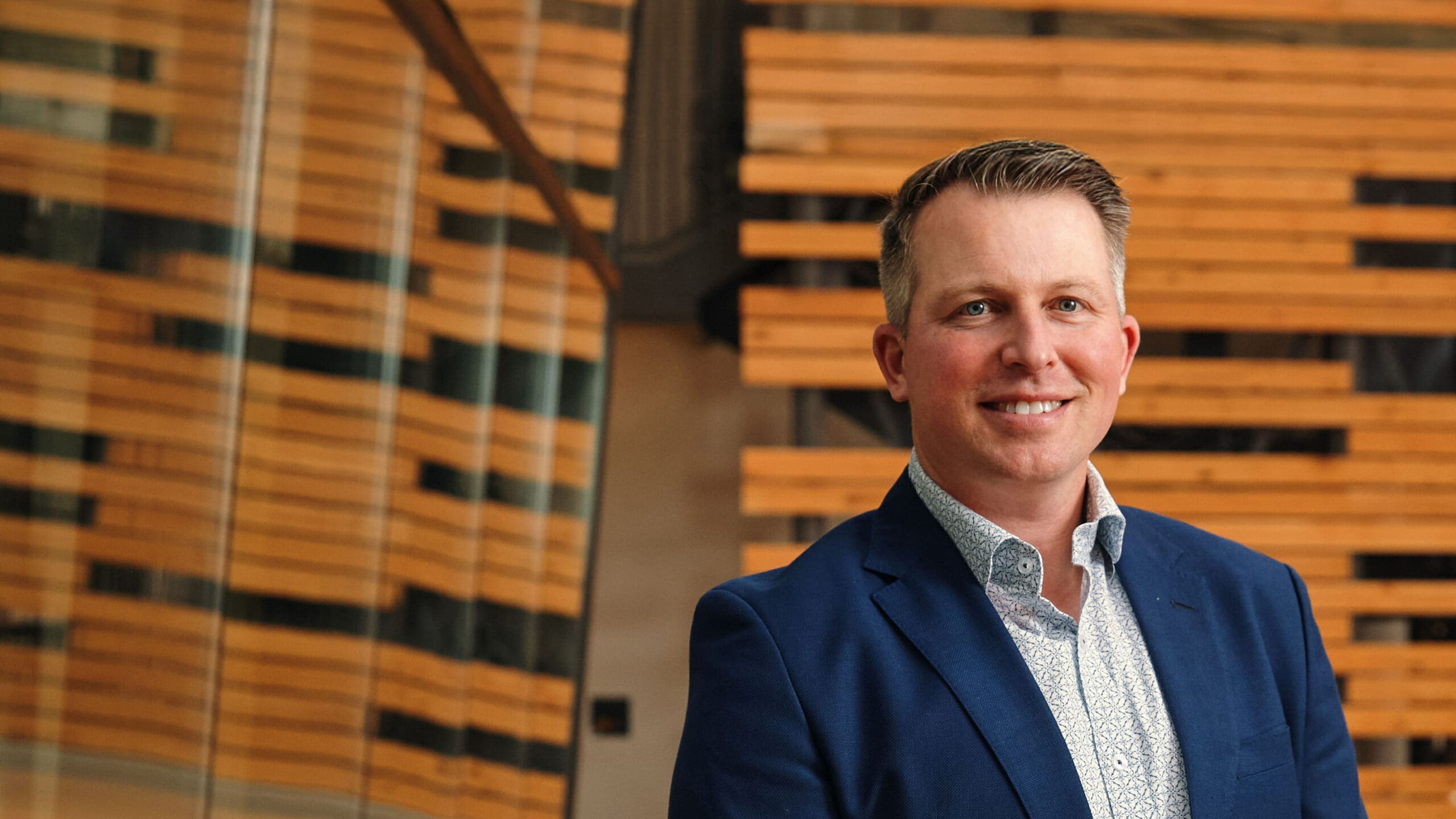
As president of Rich’s U.S.-Canada region, Kevin Spratt oversees the company’s go-to-market strategy to drive long-term growth, innovation and organizational excellence, ultimately delivering greater value to customers and associates. His oversight includes Rich’s Foodservice, In-Store Bakery and Consumer Brands divisions, as well as Demand Creation and all Category Business Unit teams. He also serves as a key member of the company’s Executive Team.
A Rich’s associate since 2001, Kevin has served in various sales and marketing leadership roles with increasing importance, including vice president of sales and business development with Rich Products of Canada, where he focused on the Foodservice, In-Store Bakery and Industrial channels; to senior vice president of Rich’s Foodservice Division, where he accelerated performance by building sharp go-to-market strategies, strengthening talent capabilities and aligning execution to improve customer engagement and results. In 2020, Kevin was promoted to senior vice president, Group Business Channels, overseeing all of Rich’s US & Canada Business-to Business divisions, prior to his most recent appointment to president of Rich’s U.S.-Canada region in 2022.
As a food industry leader, Kevin has served on several boards and committees, including his current role as board member of the National Restaurant Association (NRA), one of the largest food service trade associations in the world, as well as the NRA Education Foundation and FMI: The Food Industry Association.
Kevin earned his Bachelor of Business Administration from Brock University and continues to support the institution through participation on various committees and student-facing initiatives. He is a proud 2025 Brock University Alumni Brilliance Award winner.
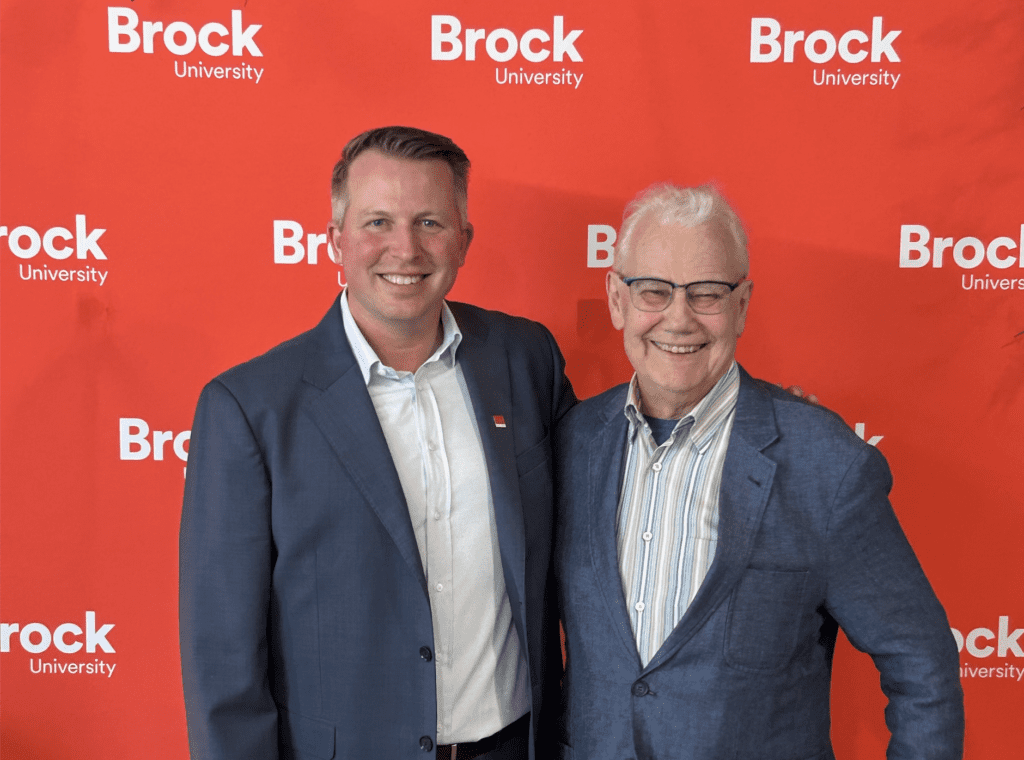
What led you to choose Brock and the Goodman School of Business?
Brock University was always my first choice. I grew up in St. Catharines, and since I was a kid, I knew I wanted to stay close to home to study.
My uncle, Ian Brindle, was a professor of chemistry at Brock and eventually became the Dean of Math and Science. He was at Brock for over 40 years, so growing up, I heard a lot about the university. In my mind, it was the only school I was actually thinking about. He was there for my entire childhood, and that connection made Brock feel like a natural home before I’d ever set foot on campus.
There was also a practical side to it. My father worked at the local Thorold Abitibi Paper Mill, and I had the opportunity to work there as a student at a good hourly wage. Choosing Brock meant I could work at The Mill and go to school at the same time.
I had some interest in accounting coming out of high school, and did a co-op at a local firm. That experience quickly showed me that accounting wasn’t the path for me, so I shifted my focus toward marketing and other business programs.
Goodman had what I was looking for, and the rest followed.
Are there any moments from your time at Brock that stand out as formative experiences?
The most influential part of my Goodman experience was the strong emphasis on case-based learning. So many of those courses were built around real-world case studies, and that approach had the biggest impact on my development. It moved beyond theory and really required us to think like business leaders: evaluating company strategy, identifying operational issues, and finding growth opportunities.
What made it valuable was that there was rarely a single right answer. You had to think strategically, figure out how to prioritize, and make decisions with incomplete information, which is exactly what the real business world looks like.
Then there was the collaborative side: working with students you didn’t know, debating different perspectives, and presenting your recommendations to the class. That sharpened your communication and leadership skills in ways that are hard to replicate.
Looking back, those case-based courses were the most instrumental in building my confidence as a decision-maker. They trained me to approach problems with a strategic mindset, ask the right questions, and work collaboratively.
When I think about how I lead and make decisions today, those foundational experiences are still very much present.
Are there any moments in your career where you felt underestimated? How did you become undeniable?
When I chose to go to Brock, there was a perception of the school that ties right into the theme of underestimated to undeniable.
Back then, the common thinking was that anyone could get in, that it was the “safe” school. The reality today is that the university has real momentum, the alumni are making significant impacts across industries, and the reputation has genuinely caught up to the talent that Goodman has been producing all along.
When you really look at what the program has become, it’s pretty undeniable.
On a personal level, when I graduated, I wasn’t sure exactly what career I wanted. My wife, whom I met in my fourth year at Brock and who is also a Brock graduate, spotted a posting for a marketing role at Rich Products Canada, a food company, and forwarded it to me. I applied.
In high school, I had worked at a local restaurant in St. Catharines, so I was already familiar with Rich’s food products. I believe hands-on experience was the differentiator that stood out during the interview process and earned me the job offer.
What was most impactful for me was seeing an employer recruiting directly from the university and having the opportunity to apply. Finding my career came down to a job posting at Brock and a referral from the woman I’d marry – nothing you could have planned for. I have now been at Rich’s for 25 years and have been happily married since 2003.
What milestones or achievements best represent your career journey since graduating?
Rich’s is a $6 billion family-owned company, a great place to build a career.
I was fortunate to start in an entry-level marketing position at Rich’s right out of school. Along the way, I’ve had the benefit of meeting some incredible leaders and mentors who pushed me and believed in me.
The milestone I’m probably most proud of is being promoted to lead our foodservice division in the United States, working at our world headquarters in Buffalo, New York.
It was a significant step, not just in terms of the title but also in scope. Leading a large organization across the border, having real success there, and then taking on additional responsibilities from that platform – that progression felt meaningful.
Now I’m on the executive team leading the US-Canada business unit and helping shape what Rich’s will look like by 2030.
Honestly, it’s beyond what my aspirations were coming out of school. I knew I wanted to be in business. I knew I wanted a good job. And I knew I wanted to stay in the Niagara region.
The idea that I could do all of that, build a full career with one company, reach the executive level, and live in Niagara has been pretty rewarding.
Can you share a moment where you overcame a challenge or external expectations?
COVID was probably the biggest test of my leadership in 25 years.
At the time, we were a sales and marketing organization built on in-person customer relationships, and suddenly we had to pivot to a fully virtual world. We had to adapt to digital marketing, digital trade shows, and new tools and new ways of working.
That shift happened fast, and it required the whole team to adapt in real time.
At the same time, everyone was dealing with their own personal situations at home. Showing up as a leader with empathy and care, while also navigating real business challenges, was a true test.
A big part of our business is the restaurant industry, and restaurants weren’t open. We had to think differently: supporting customers through takeout programs, partnering with associations, and finding new ways to keep everyone moving forward.
Meanwhile, our retail business was seeing strong growth, so we were managing two very different realities simultaneously.
Coming through that period and seeing the business grow on the other side is something I look back on with real pride.
I think one of my core traits is that I don’t get too stressed. I stay positive and keep my focus on what’s possible rather than getting weighed down by the day-to-day. I’ve always been that way, whether it was navigating a heavy course load at Brock or steering a business through a global crisis.
Always staying positive, always thinking about the future. That mindset has served me well.
What motivated you to get involved with the Goodman Legacy Council?
The Dean, Barry Wright, was a major factor. When I first started having these conversations with students at Brock, he had a vision for connecting some of these Goodman Legacy Council members.
It started off very small, and we began having conversations about what we thought this could turn into.
I feel that after a couple of years, it’s now a reality. We actually have a purpose and a goal we want to accomplish. Not only are we connected with great industry leaders, but it’s also really inspiring to see the careers of the other leaders on the council and what shaped their vision.
There’s a lot of excitement and good momentum – this is just the beginning.
Why is supporting the Goodman Legacy important to you, and what does legacy mean in the context of your journey?
One of my personal purpose statements, not just for how I show up at work but for my family and my community, is to use my strengths in positivity, care, and possibility thinking to help inspire and empower others.
Giving back to Goodman students is a direct expression of that.
I love the small group conversations with students. Every year it’s different. Right now, everything is about AI and the future of work, and you never know what questions they’re going to bring.
That keeps it fresh and real. I’ve been participating in those sessions for a couple of years now, and each time I walk away reminded of how much potential is sitting in those rooms.
From a legacy standpoint, I started my career at Rich’s because of great mentors and leaders who gave me a chance and shaped how I think. I would love to be that for someone else.
In 25 years, if one of these students says that a conversation we had made a difference in their career, that’s the goal. That’s what legacy means to me.
The advice I keep coming back to is simple: build your network and stay open.
I found my career through a job posting at Brock. We have incredible alumni working at great companies across every industry. You can’t predict where your next opportunity is going to come from, but if you’ve built genuine relationships, you’ll be ready when it arrives.
The Legacy Council exists to make those connections happen, and I want to be part of that.


Stay Connected
Brock University
St. Catharine’s Campus
1812 Sir Isaac Brock Way
St. Catharine’s, ON
L2S 3A1, Canada
Privacy
| Terms & Conditions
Copyright © 2026 Goodman Legacy