
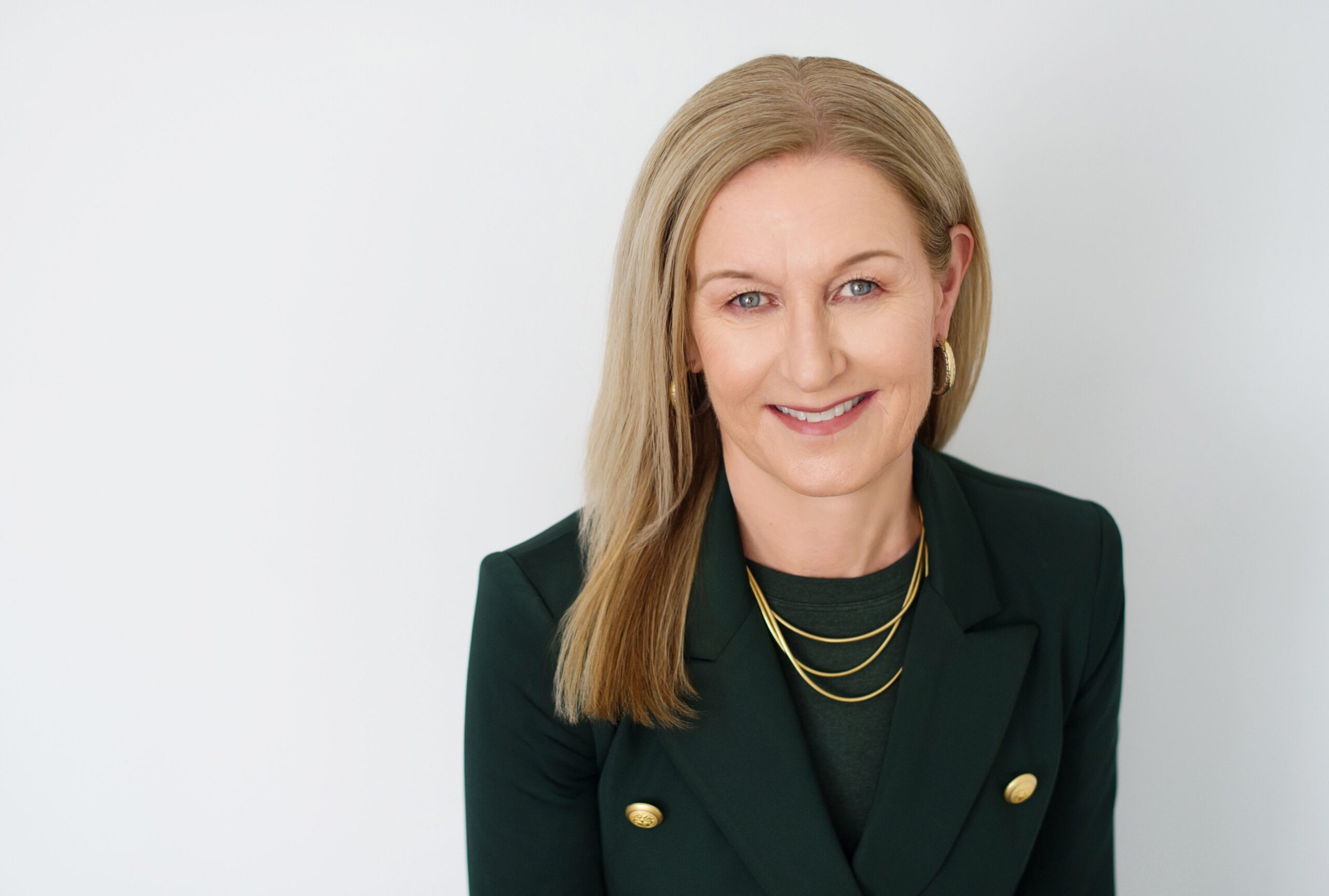
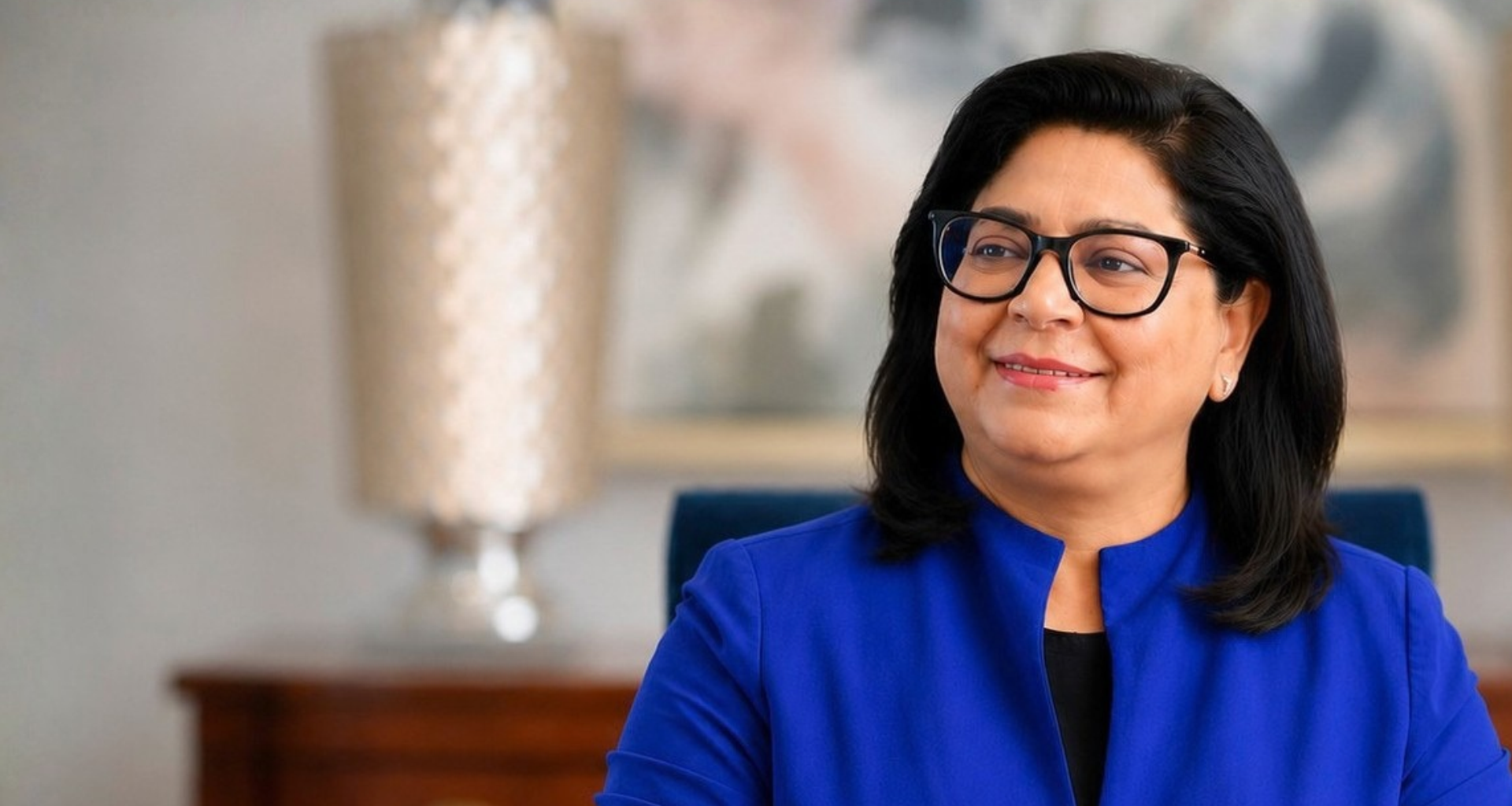
Dr. Deborah Rosati (BAdmin 1984, Honorary Doctorate 2023) is an award-winning entrepreneur and corporate director who, over her 35-year + career, has been recognized as a champion of corporate governance, a catalyst for change, and a builder of community.
In 2015, Deborah founded Women Get On Board Inc. (WGOB), a social-purpose company with a bold vision to create a national movement that transforms boardrooms and beyond. As Founder and CEO, she has dedicated the past decade to advancing WGOB’s mission to connect, promote, and empower women to serve on corporate boards with confidence and courage.
Deborah is deeply dedicated to amplifying the voices of women leaders, board members, and professionals across Canada through education, mentorship, and allyship. She advocates the “power of three” philosophy, rooted in the belief that one woman in the boardroom is a token, two are a presence, and three women generate a true voice for change.
A respected leader in the boardroom, Deborah has chaired boards and audit, nominating, and corporate governance committees. She has served as lead director of publicly traded companies and has led or participated in numerous special committees. Her involvement includes mandates such as initial public offerings, private placements, mergers and acquisitions, restructuring, and special investigations.
Her dedication and commitment to inclusive governance and board diversity stem from her own experience as often the only woman at the table. These experiences have strengthened her belief that increased female representation on boards results in better business outcomes and more effective governance.
Her commitment to supporting the next generation of leaders is reflected in her work with the Goodman School of Business. She established the Deborah E. Rosati Entrepreneurship Award and the Deborah Rosati Women in Leadership Mentorship Program, built on the belief that while mentorship is powerful, sponsorship is essential to opening doors and accelerating women’s advancement. Deborah currently serves as Chair of the Goodman Legacy Council.
Deborah’s dedication to sustainable change, along with her extensive governance and financial expertise and engaging presence, has made her a highly sought-after thought leader and speaker. She is a passionate speaker and writer on corporate governance, sustainability, inclusion, and social impact.
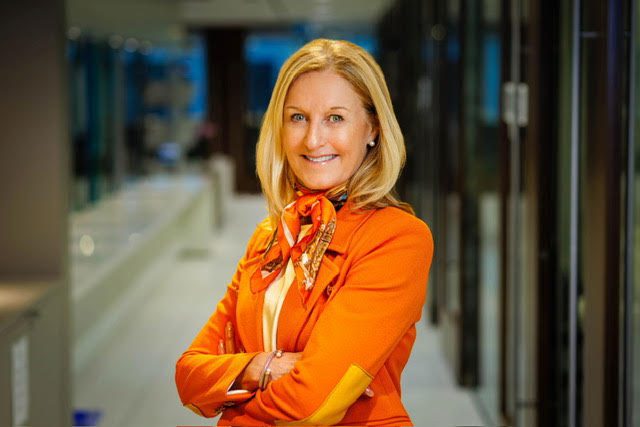
What led you to choose Brock and the Goodman School of Business?
Growing up, I wanted to be a businessperson just like my father.
My father was a Dutch immigrant who came to Canada from Holland when he was 14. He was very much a self-made man and very successful in business.
I saw him going out to work. He looked important. He was involved in the community, and I said, ‘I want to be like that.’ So it was always going to be business.
I grew up in Toronto, and after finishing Grade 13, I planned to attend Wilfrid Laurier because it offered a co-op program. At the time, I didn’t know much about Brock, to be completely honest.
My family later moved to Niagara, and that’s when I found out Brock had a co-op accounting program. I thought, “Wait a second—I can live at home, buy a car, and commute between Welland and St. Catharines. That sounds like a great idea.”
I just knew that studying business was a means to an end.
Accounting was simply a means to an end—to becoming a businesswoman and having a profession. So I never really thought much about it other than just doing it.
I have never looked back. Brock University’s Co-op Accounting program was the best decision I could have made.
How did your Goodman education prepare you for the career path you’ve taken?
For me, it wasn’t really about whether I wanted to do something else. I was simply very focused and disciplined – knowing I had to step into big shoes early in my career.
My high school didn’t offer accounting. I didn’t even know what it was before I signed up for this co-op accounting program. I’d better learn.
I really had to work hard because it didn’t come naturally to me. I was comfortable with numbers, so that was fine. I hadn’t applied the concept before. I had never used it prior to this. It was like, “Oh my God, I’m in this program. I can’t fail.” So, I put in a lot of effort.
But I will tell you, the courses I enjoyed the most were non-accounting ones.
I love marketing, and I did a philosophy course and even a first-year law class.
I really embraced all of the different teachings and learnings, just that enrichment to have a broader perspective than just, “Hey, I know accounting.”
I would say that accounting’s never defined me, because I’ve evolved.
I can say I’m a businesswoman, but I don’t think of myself as an accountant.
Are there any moments in your career where you felt underestimated? How did you become undeniable?
The first time I felt underestimated was when a senior partner at the accounting firm where I was articling told me I would never become a Chartered Accountant.
It was pretty devastating.
You can imagine that back in the 80s, there weren’t many women at the table. It was mostly men.
At that time, I had an incredible office manager who genuinely saw potential in me. He would take me along on audits and client visits, and truly, he uplifted me.
My family lifted me up, and being at Brock University, knowing I was there doing what I intended, gave me confidence.
When I passed my Chartered Accountancy exams the first time, I was really proud of myself.
I didn’t let one person define who I should be.
On another occasion, I was a senior managing a specific file for a client. I showed up once, and they said,
“We’ll wait for the boss.”
I said, “No, I’m a senior on the job.”
I would get mistaken for the coffee girl.
“Can you go get us coffee?”
“Sorry, no.”
There were many times like that, but you know what? I never let it diminish me in any way because I knew that by taking the route I chose to get my business degree and then becoming a Chartered Professional Accountant, no one could ever take that away; knowledge is power.
I believe it truly boosted my confidence and courage to be in rooms that others might doubt because I knew I was there as a professional.
I never got into a room and thought, ‘Why am I here?’
I would enter a room and think, ‘Okay, what’s the value I can bring? What are the skills that I have?’
What milestones or achievements best represent your career journey or impact since graduating?
By the time I turned 24, I had already completed three years of articling and finished my Chartered Accountancy exams, so I felt quite prepared to begin my life’s work.
I moved to Ottawa and worked in public accounting for about a year and a half, but by then, I was really bored. I thought, there’s got to be more to life than just tax seasons and audits.
I had the chance to join a technology company, Cognos, as a Policy Procedures Analyst. It was a highly technical role. They had recently gone public in the U.S., so I needed to do a lot of research. It was definitely a challenge, clearly outside my comfort zone, but I knew I wanted to grow.
I had a boss who was a go-getter, and I wanted to be like him. So I worked very hard.
I ended up being CFO of an early-stage technology company and took it from ground zero to a very successful exit in the late 90s.
I was given opportunities at a young age, and I just thought, I cannot disappoint. I’ve got to show up and do my best, and that led to other opportunities.
From that, I went into venture capital as a general partner, and that’s really where my governance world started.
I began serving on boards and truly valued the idea of leadership and oversight.
I was the only woman partner and the only woman at the table. That didn’t really matter; I simply didn’t have any female role models besides men.
It was over 25 years ago when I stepped onto my first corporate board, and I never looked back because I always looked forward.
There were times when I didn’t know things, like raising capital, but I was very resourceful. I would find ways to understand it. I never faked it.
After leaving venture capital, I became an independent corporate director for several technology venture funds and, during that time, completed a governance certification program. It was very helpful—the Institute of Corporate Directors-Directors Education Program. I had to write an exam; it had been over 20 years since I’d written one, and I wondered, how do you do that again?
I studied really hard, and I passed.
For me, it was truly pivotal because I had been serving on boards for seven or eight years, but this governance certification provided a framework for being an effective board member.
Taking accounting is very principles-based. You have frameworks, so you can refer back to those frameworks and principles — and that’s very much what governance is about.
So I just kept advancing in my governance and leadership roles in the boardroom—I was surrounded by these really inspiring people, so I kept thinking, okay, I can’t let them down. I’ve got to show up. I have to be prepared. I have to be overprepared.
I need to express my position, but I also have to step forward. If I want to be on a committee and I’m not being considered, I need to say that I’m interested.
I’ve always believed in continuous learning. I’m still learning where I am today.
In 2015, I decided to establish a company called Women Get On Board Inc. (WGOB). Our mission was to connect, promote, and empower women onto corporate boards.
I had been serving on boards for years, and I was usually the only woman at the table.
This whole systemic inequity made me realize that gender diversity was not only a moral issue but a strategic one.
Last year, WGOB celebrated its 10th anniversary, and a monumental moment for me was having a TSX closing to mark it. We’ve created a national movement and have 850 members across Canada. By building a community that supports you, you can elevate the next generation of women corporate directors.
One of the fundamental pillars is what I call the power of three: one woman on a board is a token, two is a presence, and three is a voice.
That voice can carry weight, you can be authentic, and you can have much more influence.
People have asked me, ‘When will you be done?’ If we’re only at 30% of TSX-listed companies with women on their boards, I’ll be done when we reach gender parity.
If I can open the door for one more woman to get on a board, then I’m doing my work.
Why is supporting the Goodman Legacy important to you, and what does legacy mean in the context of your journey?
Legacy can mean many things, but I believe it’s about how you create a better place and opportunity than when you first arrived.
It’s something that will leave a lasting impact and remain sustainable.
I like to think of life in three chapters. Your first chapter is preparing for your life’s work. Your second chapter is doing your life’s work. And your third chapter is giving back. I believe that’s where I am.
I’ve had three opportunities to give back to Brock.
First, I created a program, the Deborah E. Rosati Entrepreneurship Award, to support students in becoming full-time entrepreneurs during the Spring/Summer term.
Then I created the Deborah Rosati Women in Leadership Mentorship Program, and we’re now in the fourth cohort. That came from seeing the value of one-to-one mentorship and recognizing that women need sponsors—people who will open doors for them.
And now, the Goodman Legacy Council.
What I realized is that those earlier programs were individual. The Goodman Legacy Council is about something bigger than ourselves.
It’s about being sustainable and creating something that goes beyond any one of us.
It’s about committed leaders coming together to create experiences, elevate the brand, and invest in students.
Whether it be monetarily or in time, the opportunity to give back and make an impact is very, very meaningful.
This is also part of my third chapter –
I’ve written many articles and blogs, I really want to advocate, and I’ve declared that I’m going to write a book.
It’s going to take me outside my comfort zone, but I feel like that is part of my next chapter, my third chapter.




Stay Connected
Brock University
St. Catharine’s Campus
1812 Sir Isaac Brock Way
St. Catharine’s, ON
L2S 3A1, Canada
Privacy
| Terms & Conditions
Copyright © 2026 Goodman Legacy